
If there were a “most studied” award in skincare, tretinoin would win by a landslide.
Backed by decades of clinical research, tretinoin remains the gold standard for treating acne, fine lines, uneven texture, and sun damage. Yet despite its proven benefits, it is still surprisingly underused. Many people rely on over-the-counter retinol creams, expensive facials, or trending serums without realizing that a prescription-strength retinoid could deliver far more meaningful results.
So why is tretinoin still overlooked? And what makes it so powerful?
Let’s break it down.
What Is Tretinoin?
Tretinoin is a prescription-strength derivative of vitamin A. Unlike cosmetic retinol products that require multiple conversion steps in the skin, tretinoin works directly at the cellular level.
It speeds up skin cell turnover, stimulates collagen production, and helps normalize pore function. That combination makes it one of the most effective topical treatments for both acne and visible aging.
Tretinoin has been FDA-approved for acne for decades and has been extensively studied for photoaging, including fine lines, pigmentation, and rough texture.
Why Tretinoin Is the Gold Standard
1. It Stimulates Collagen Production
Collagen begins to decline in your mid-to-late 20s and continues decreasing with age. Tretinoin has been shown to stimulate new collagen formation and reduce collagen breakdown caused by UV exposure. This can help soften fine lines and improve skin firmness over time.
Unlike many cosmetic creams that only hydrate or temporarily plump the skin, tretinoin works deeper to remodel the skin’s structure.
2. It Improves Skin Texture and Tone
Tretinoin accelerates cellular turnover. That means:
Smoother texture
Fewer clogged pores
More even pigmentation
Brighter overall appearance
Over time, dull and sun-damaged skin is gradually replaced with healthier new skin cells.
3. It Treats Acne at the Root
Tretinoin helps prevent pores from becoming clogged, which is the starting point of acne. It reduces blackheads, whiteheads, and inflammatory breakouts by normalizing how skin cells shed inside the follicle.
This makes it effective for both teen acne and adult hormonal acne.
Why Aren’t More People Using It?
Despite its benefits, many people hesitate to start tretinoin for a few reasons:
Fear of irritation
Misunderstanding about “retinol vs tretinoin”
Concern about purging
Lack of proper guidance
Yes, tretinoin can cause temporary dryness or peeling, especially in the first 4 to 8 weeks. But with proper dosing, gradual introduction, and supportive skincare, most people can tolerate it well.
In fact, irritation is often a sign that your skin is adjusting, not that the product is damaging it.
Tretinoin vs Retinol: What’s the Difference?
Over-the-counter retinol must convert several times in the skin before becoming active. Tretinoin does not require this conversion. It binds directly to retinoic acid receptors in skin cells, making it significantly more potent and predictable.
While retinol can be helpful for beginners, tretinoin delivers stronger and more clinically validated results for acne, hyperpigmentation, and wrinkles.
Who Is a Good Candidate for Tretinoin and How to Use It Safely
Tretinoin may be beneficial if you:
Struggle with persistent acne
Notice fine lines or early signs of aging
Have uneven skin tone or sun damage
Want long-term skin remodeling, not just surface hydration
It is not recommended during pregnancy, and it should always be used under medical supervision to ensure proper strength and application guidance.
To minimize irritation and maximize results:
Start low and go slow.
Use a pea-sized amount at night.
Apply moisturizer before or after depending on sensitivity.
Always wear sunscreen daily.
Consistency matters more than strength. Long-term use produces the most noticeable transformation.
Not all tretinoin formulations are the same. Strength, frequency, and skin type all play a role in outcomes.
It’s important to connect with a provider to determine whether tretinoin is a good fit and to be prescribed the appropriate formulation. When used correctly, tretinoin becomes a cornerstone of a long-term skin health plan rather than a short-term trend.
The Bottom Line
Tretinoin has remained the gold standard for acne and anti-aging for decades because it works at the cellular level. It builds collagen. It clears pores. It improves tone and texture. And it does so with more clinical evidence than almost any other topical in dermatology.
It may not be flashy. It may not be trending on social media every week. But it remains one of the most powerful tools in modern skincare.
Sometimes the gold standard is simply the one that never needed replacing.
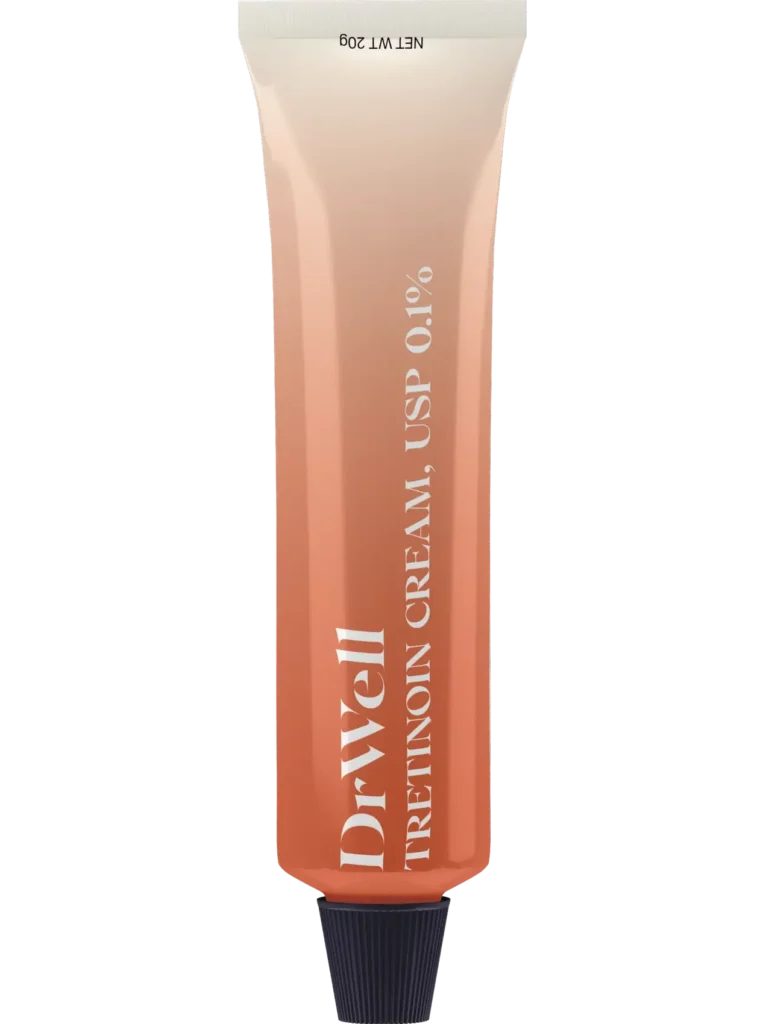
DrWell’s Tretinoin
Tretinoin is a prescription-strength topical retinoid derived from vitamin A, widely used to treat acne, uneven skin texture, fine lines, and hyperpigmentation. It works by increasing cell turnover, unclogging pores, and stimulating collagen production—making it one of the most effective treatments for both active breakouts and anti-aging skin care.