
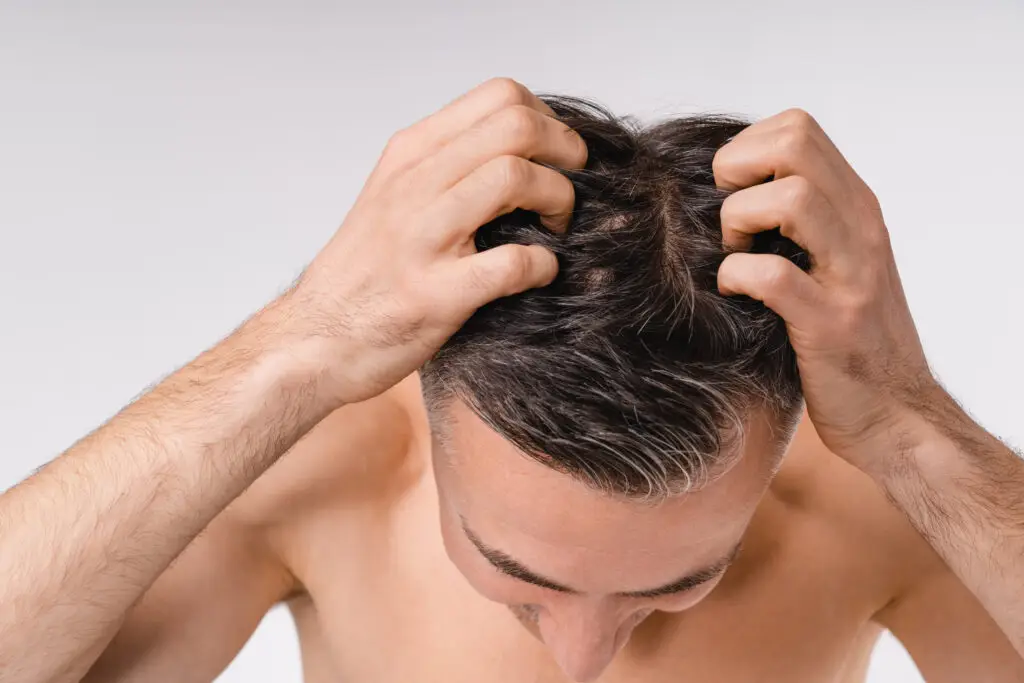
Hair loss affects more than half of men by the age of 50 — and for many, it starts much earlier. What causes male hair loss? Here are the factors explained.
If you’ve noticed thinning at the temples, a widening part, or more hair in the shower drain, you’ve probably asked yourself:
Is it stress? Hormones? Genetics? Or all of the above?
The truth is, male hair loss is rarely caused by just one factor. It’s typically the result of a complex interaction between DHT, genetics, and environmental stressors.
Let’s break down what’s really happening, one factor at a time.
Factor #1: DHT
The most common cause of hair loss in men is androgenetic alopecia, also known as male pattern baldness.
At the center of this process is a hormone called dihydrotestosterone (DHT).
What exactly is DHT? It’s is a byproduct of testosterone. In men who are genetically sensitive to it, DHT binds to receptors in hair follicles, particularly at the hairline and crown, causing them to gradually shrink in a process called miniaturization.
Over time:
Hair grows back thinner
Growth cycles shorten
Follicles become dormant
Hair stops growing altogether
This is why DHT is considered the primary hormonal driver of male pattern hair loss. Keep in mind, DHT is not “bad.” In fact, it plays important roles in male development, muscle growth, and overall health. The problem is not the hormone itself. The problem is how sensitive your hair follicles are to it, and if you’re genetically predisposed, you are more prone to male pattern baldness.
Unfortunately, you cannot change your genetics. But you can influence how DHT affects your follicles.
The key is reducing DHT levels in the scalp before significant miniaturization occurs. Once a follicle has completely shut down, regrowth becomes much more difficult. But since hair loss doesn’t happen overnight, interventions like finasteride, can slow or even partially reverse the process.
The earlier DHT is addressed, the better the long-term outcome tends to be.
Factor #2: Genetics
If your father, grandfather, or uncles experienced hair thinning, your risk increases significantly. Genetic hair loss is inherited and determines how sensitive your follicles are to DHT.
However, it’s important to remember that genetics do not mean inevitability. Early intervention can significantly slow progression and preserve existing hair.
Factor #3: Stress
While DHT and genetics are central, chronic stress can accelerate hair shedding.
Stress can:
Increase cortisol levels
Disrupt the hair growth cycle
Push follicles prematurely into the shedding phase
Worsen inflammation in the scalp
Stress-related shedding (telogen effluvium) is often temporary, but when combined with DHT sensitivity, it can make thinning appear faster and more dramatic.
Managing stress, improving sleep, and supporting overall health all matter.
The Bottomline: Hair Loss Is Common. But It’s Also Treatable.
Male hair loss is influenced by DHT, genetics, and stress — but modern treatment options allow you to address these factors more effectively than ever before.
Many over-the-counter hair products focus on a single pathway by either blocking DHT, stimulating growth, or improving hair strength. The problem is that male pattern hair loss is rarely caused by a single issue.
A more effective approach addresses multiple pathways at once by protecting follicles from DHT, encouraging healthy growth cycles, and supporting stronger, thicker hair from the root.
With the right strategy and early intervention, it is possible to slow progression, preserve existing hair, and support regrowth in thinning areas.
A More Complete Approach with Cedar
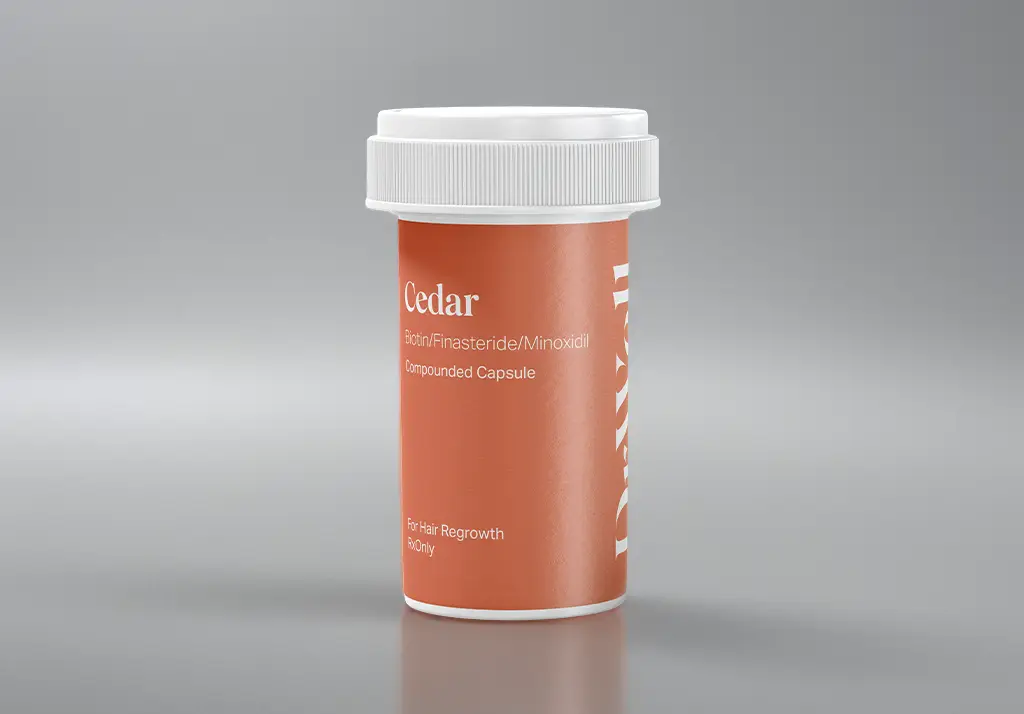
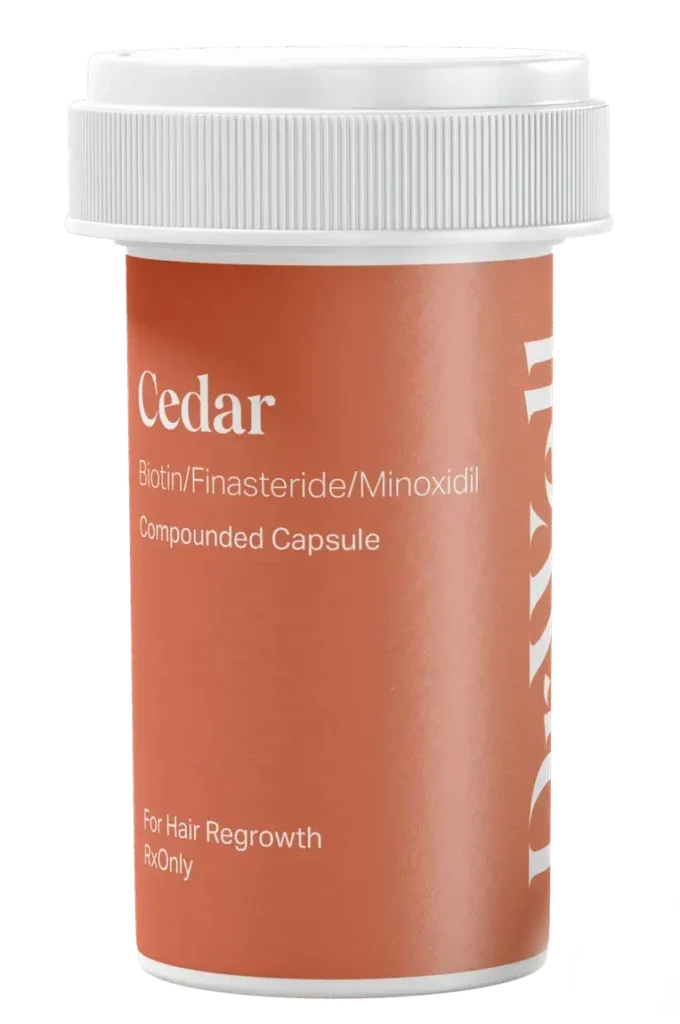
DrWell’s Cedar is a once-a-day capsule designed to target multiple causes of male hair loss.
Key Ingredients include:
Minoxidil – Minoxidil improves blood flow to hair follicles and extends the growth (anagen) phase of the hair cycle. This encourages thicker, longer-growing strands.
Finasteride – This works by inhibiting the conversion of testosterone into DHT. By lowering DHT levels in the scalp, it helps protect hair follicles from miniaturization and supports maintenance of existing hair.
Biotin – Supports keratin production, strengthens hair structure, and may reduce breakage, helping hair appear fuller and healthier.
Cedar stands out because it addresses:
Hormonal protection (DHT reduction)
Follicle stimulation (growth phase support)
Hair strand strengthening (structural resilience)
The result is a more comprehensive solution for men who want to improve hair density, slow progression, and support long-term follicle health.
However, if you are a premenopausal woman, the Cedar ingredient finasteride is associated with birth defects. So ask your provider for Cedar for Women which has no finasteride.
Try Cedar Through DrWell
DrWell’s Cedar is designed to address hair thinning from multiple angles. Instead of focusing on just one pathway, Cedar targets DHT-related follicle sensitivity, supports a healthier growth cycle, and strengthens the hair at the root. By combining clinically backed ingredients into one approach, it helps protect existing hair while encouraging thicker, fuller growth over time.