
Anastrozole
A compounded oral aromatase inhibitor that a licensed provider may prescribe to manage estrogen levels, based on lab work and clinical evaluation. Compounded medications are not FDA approved.
Compounded drugs are not FDA approved. FDA does not review compounded drugs for safety, effectiveness, or quality before marketing.
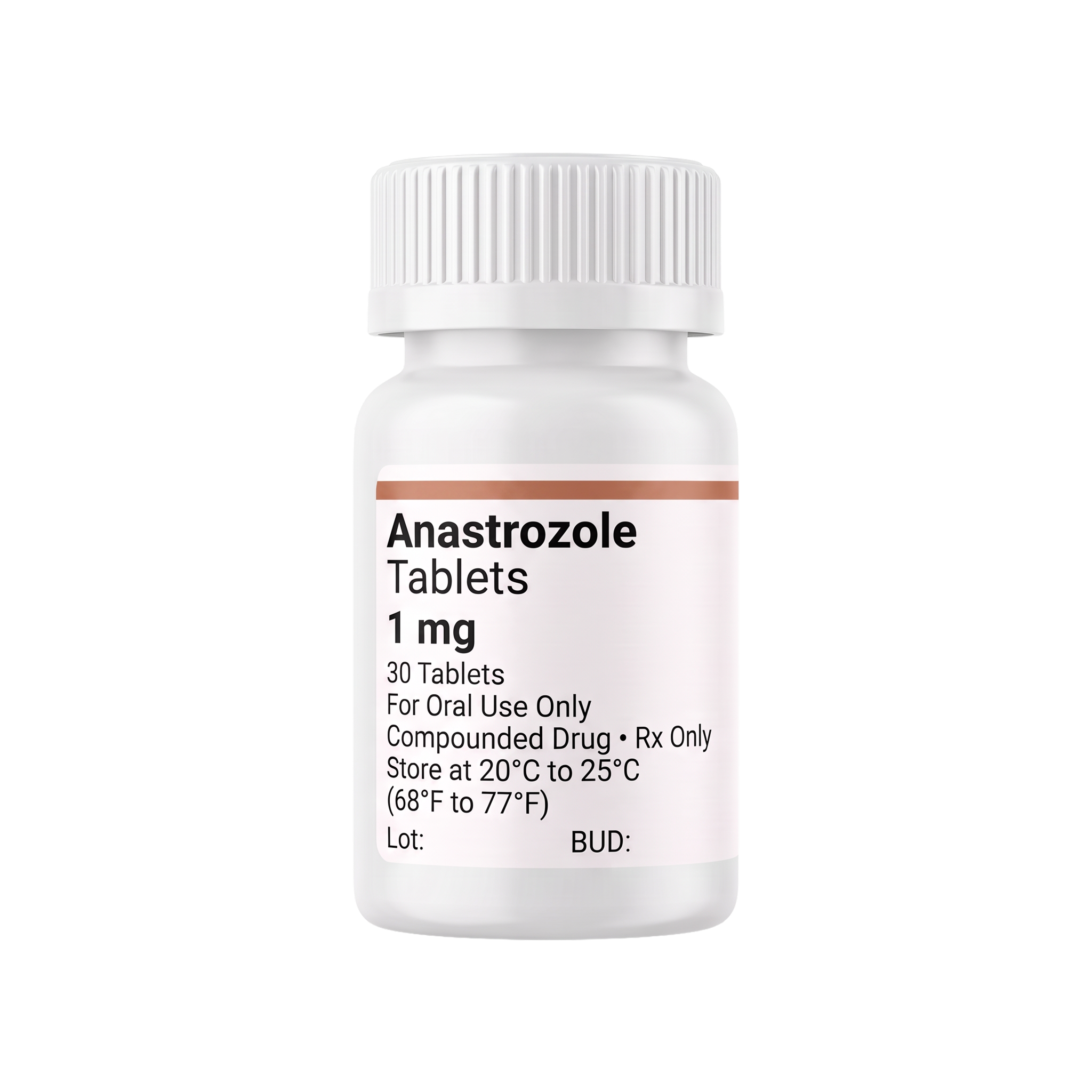
See it before your first visit
Photographs of the medication as dispensed.


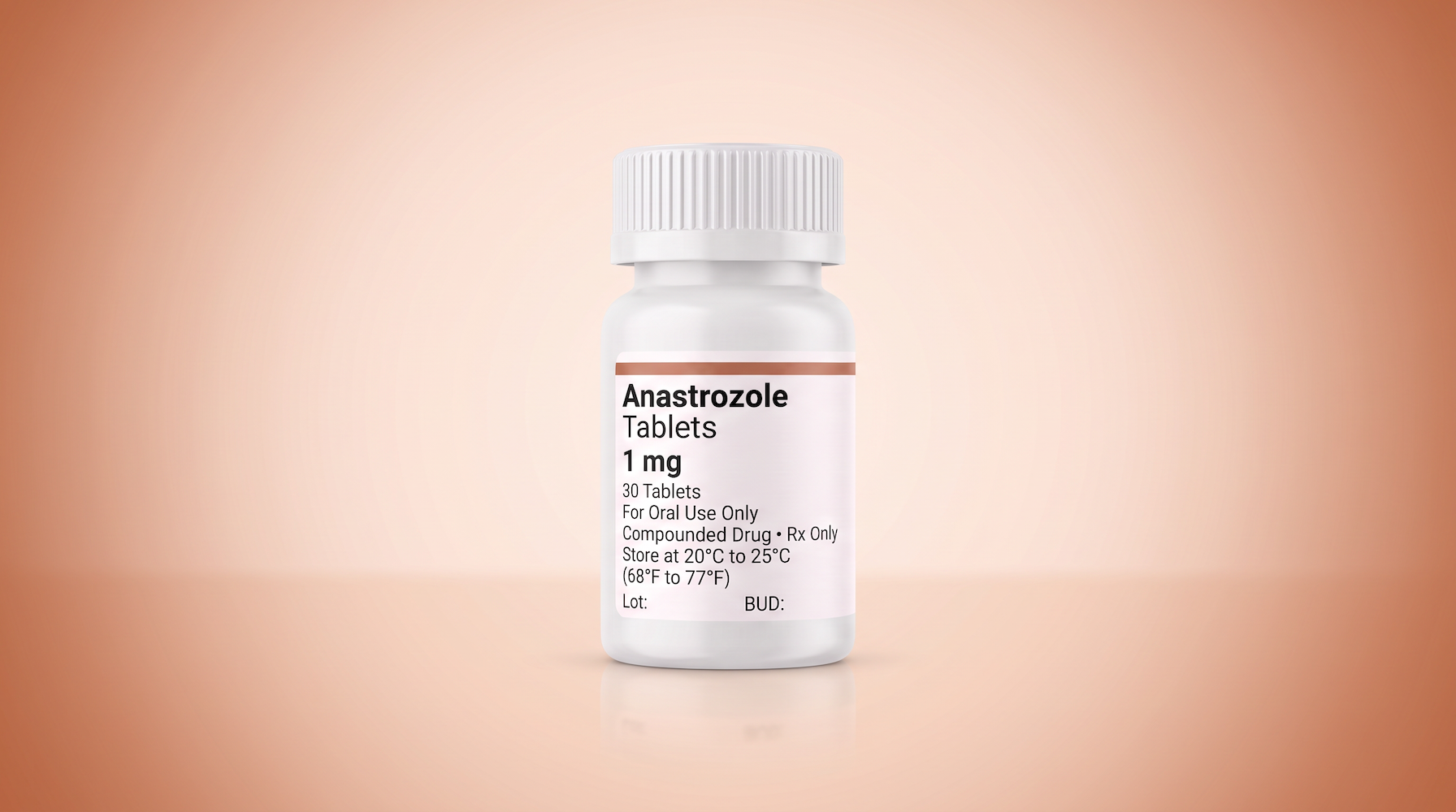
What it is
Anastrozole is an aromatase inhibitor. It lowers the amount of estrogen the body makes by blocking the enzyme that converts testosterone into estrogen. A licensed provider may prescribe it to manage estrogen levels when lab results and symptoms support it.
This medication is compounded. It is prepared by a licensed pharmacy for an individual patient based on a prescription. Compounded medications are not FDA approved, which means the FDA has not evaluated their safety, effectiveness or quality.
How it works
The body converts a portion of testosterone into estradiol, a form of estrogen, using an enzyme called aromatase. Anastrozole blocks that enzyme, which reduces estrogen production.
Estrogen is needed for bone, heart, brain and sexual health in both men and women, so the goal is balance, not the lowest possible level. Your provider sets the dose and adjusts it based on your lab results.
What to expect
Treatment begins only after a provider reviews your symptoms, health history and lab results, including estradiol and testosterone levels. Follow-up lab work is part of treatment for as long as you remain on therapy, and doses are adjusted based on those results.
Your provider sets your dose and schedule. Individual responses vary, and results are not guaranteed.
Who it is for
Whether anastrozole is appropriate for you is a decision made by a licensed provider based on your symptoms, examination, laboratory results and health history. It is not appropriate for everyone, and it is not a treatment for sexual dysfunction on its own.
It is not intended for use in women who are pregnant or may become pregnant.
This page is general information and is not medical advice.
Side effects
Commonly reported side effects include hot flashes, joint and muscle pain, headache, weakness, mood changes and nausea.
Lowering estrogen too far can cause low libido, erectile difficulties, fatigue, depressed mood, and reduced bone density over time. Other serious risks include elevated cholesterol, heart problems in people with existing heart disease, and allergic reactions. Contact your provider promptly about bone or joint pain, chest pain, or any sign of an allergic reaction.
This is not a complete list. Ask your provider about the full prescribing information.
Read this before you start
Compounded drugs are not FDA approved. FDA does not review compounded drugs for safety, effectiveness, or quality before marketing.
Medication availability, formulation, packaging and pharmacy fulfillment vary based on the patient's prescription and location.
Compounded medication. This medication is compounded by a licensed pharmacy and is not FDA approved. The FDA has not evaluated compounded medications for safety, effectiveness or quality. It is prescribed for an individual patient by a licensed provider.
Bone health. Lowering estrogen can reduce bone density. Your provider may monitor your bone health during treatment.
Who should not use it. Anastrozole should not be used during pregnancy and should be used with caution in people with heart disease, high cholesterol or osteoporosis. Tell your provider about all your medical conditions and medications.
Monitoring. Your provider should monitor your estradiol, testosterone and other relevant lab values during treatment.
Not medical advice. The information on this page is general and educational. It does not establish a provider relationship and does not replace a consultation with a licensed provider.
Common questions
Is this medication FDA approved?
No. This medication is compounded by a licensed pharmacy, and compounded medications are not FDA approved. The FDA has not evaluated them for safety, effectiveness or quality.
Do I need lab work first?
Yes. A provider reviews your estradiol and testosterone levels and health history before deciding whether treatment is appropriate. Follow-up labs continue throughout treatment.
Can too little estrogen be a problem?
Yes. Estrogen supports bone, heart and sexual health, and levels that are too low can cause fatigue, low libido and bone loss. This is why dosing is guided by labs.
What if I have side effects?
Contact your prescribing provider. Do not change your dose on your own.
%20(1)%20(1)%20(1).png)