BPC-157
A compounded synthetic peptide that a licensed provider may prescribe after clinical evaluation. Human research data is limited. Compounded medications are not FDA approved.
Compounded drugs are not FDA approved. FDA does not review compounded drugs for safety, effectiveness, or quality before marketing.
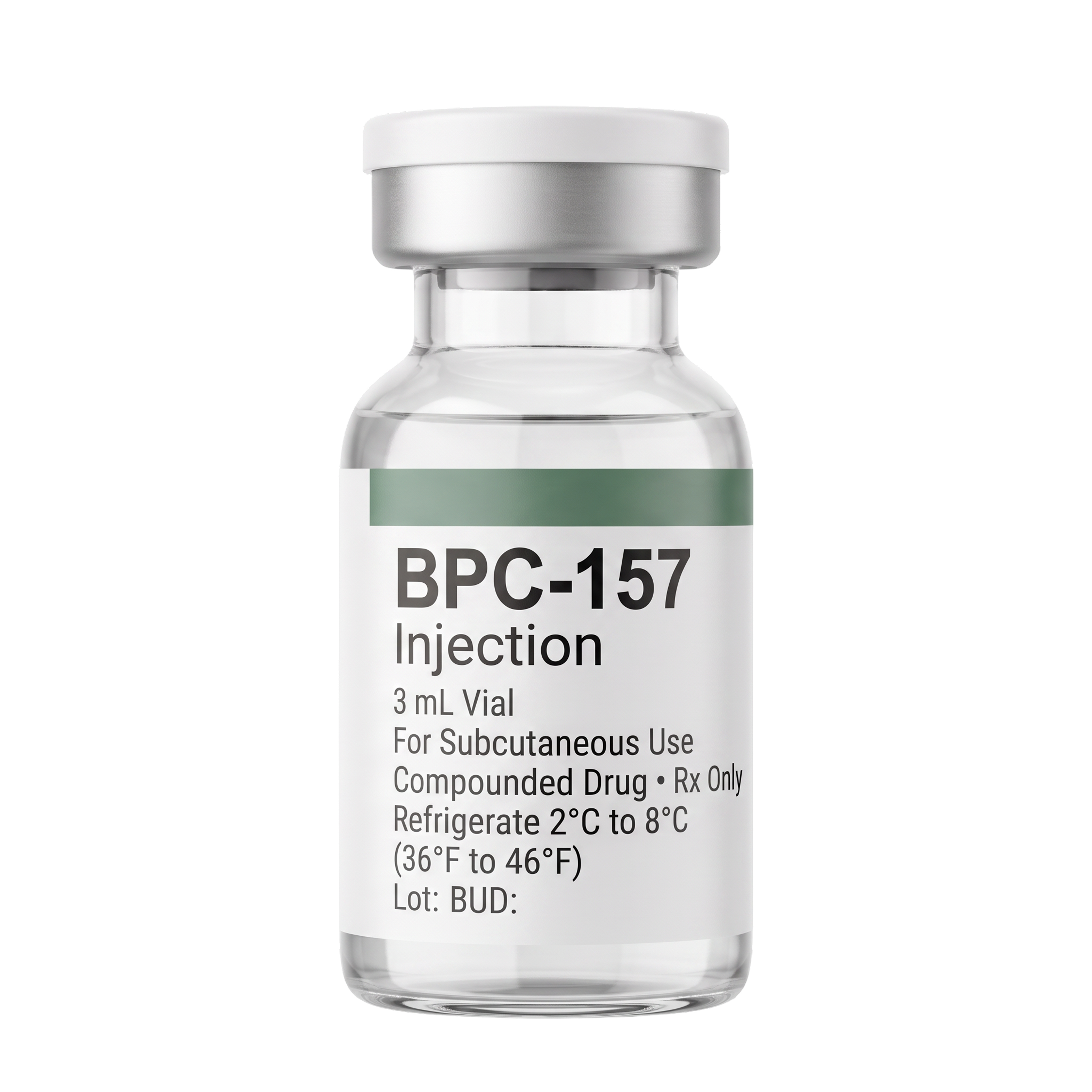
See it before your first visit
Images are for illustrative purposes only. Actual medication appearance, packaging, and labeling may vary by pharmacy.

What it is
BPC-157 is a synthetic peptide made of 15 amino acids, based on a protein sequence found in gastric juice. People often ask about it in connection with joint, tendon, ligament and gut health. A licensed provider decides whether it is appropriate for you after reviewing your health history and medications.
Human research on BPC-157 is very limited. Most of what is known comes from laboratory and animal studies. It has not been shown in large, well-controlled clinical trials to be safe or effective for any use in people.
This medication is compounded. It is prepared for an individual patient based on a prescription. DrWell sources compounded peptides from prevetted 503A compounding pharmacies. Compounded medications are not FDA approved, which means the FDA has not evaluated their safety, effectiveness or quality.
How it works
Laboratory and animal research has looked at whether BPC-157 affects the growth of new blood vessels (angiogenesis) and the cell signaling involved in tissue repair. Those same processes raise a theoretical concern, because uncontrolled blood vessel or cell growth matters for people with cancer or precancerous conditions.
These effects have not been established in humans. Your provider determines whether BPC-157 is appropriate for you and how it should be used.
What to expect
Your provider will review your health history and current medications before prescribing, and will explain the dose, schedule and how to use it. Follow-up visits are part of treatment.
Because human evidence is limited, no specific outcome can be promised. Individual responses vary, and results are not guaranteed.
Who it is for
Whether BPC-157 is appropriate for you is a decision made by a licensed provider based on your health history, medications and goals. It is not appropriate for everyone, including people who are pregnant or nursing and people with a current or past cancer diagnosis or a condition involving abnormal cell growth, unless your provider directs otherwise.
This page is general information and is not medical advice.
Side effects
Because human safety data are limited, the full range of side effects is not known. Reported or expected effects of peptide treatments in general include irritation, redness or discomfort where the medication is applied or injected, headache, dizziness, nausea and fatigue. Allergic reactions are possible.
Contact your provider promptly about swelling, trouble breathing, a spreading rash, or any symptom that concerns you.
This is not a complete list. Ask your provider for more information.
Read this before you start
Compounded drugs are not FDA approved. FDA does not review compounded drugs for safety, effectiveness, or quality before marketing.
Medication availability, formulation, packaging and pharmacy fulfillment vary based on the patient's prescription and location.
Compounded medication, not FDA approved. This medication is compounded and is not FDA approved. The FDA has not evaluated compounded medications for safety, effectiveness or quality. It is prescribed for an individual patient by a licensed provider.
Pharmacy sourcing. DrWell obtains this medication from prevetted 503A compounding pharmacies. Sourcing from a vetted pharmacy does not make a compounded medication FDA approved and does not establish that it is safe or effective.
Limited human evidence. BPC-157 has been studied mainly in laboratory and animal research. It has not been shown in large, well-controlled clinical trials to be safe or effective in people. Long-term safety is unknown.
Cell growth and blood vessel formation. BPC-157 may affect the formation of new blood vessels and cell growth. The effect in people with cancer, a history of cancer or precancerous conditions is not known. Tell your provider about any of these.
Pregnancy and nursing. Do not use if you are pregnant, planning to become pregnant or nursing unless your provider directs otherwise.
Monitoring. Your provider should monitor your health during treatment.
Not medical advice. The information on this page is general and educational. It does not establish a provider relationship and does not replace a consultation with a licensed provider.
Common questions
Is BPC-157 FDA approved?
No. BPC-157 is compounded, and compounded medications are not FDA approved. The FDA has not evaluated them for safety, effectiveness or quality.
How much human research is there on BPC-157?
Very little. Most research has been done in laboratory and animal studies. It has not been shown in large, well-controlled clinical trials to be safe or effective in people.
Where does DrWell get BPC-157?
From prevetted 503A compounding pharmacies. That does not make it FDA approved, and it does not establish that it is safe or effective.
Does it heal joints, tendons or ligaments?
That has not been shown in people. No specific outcome can be promised, and individual responses vary.
What are the risks?
Long-term safety is unknown. Research suggests BPC-157 may affect blood vessel and cell growth, so tell your provider if you have or have had cancer or a condition involving abnormal cell growth.
How is it used?
Exactly as your provider directs. Do not change the dose or schedule on your own.
What if I have side effects?
Contact your prescribing provider. Seek urgent care for swelling, trouble breathing or signs of a serious allergic reaction.