
Enclomiphene
A compounded oral medication that a licensed provider may prescribe to support the body's own testosterone production, based on lab work and clinical evaluation. Compounded medications are not FDA approved.
Compounded drugs are not FDA approved. FDA does not review compounded drugs for safety, effectiveness, or quality before marketing.
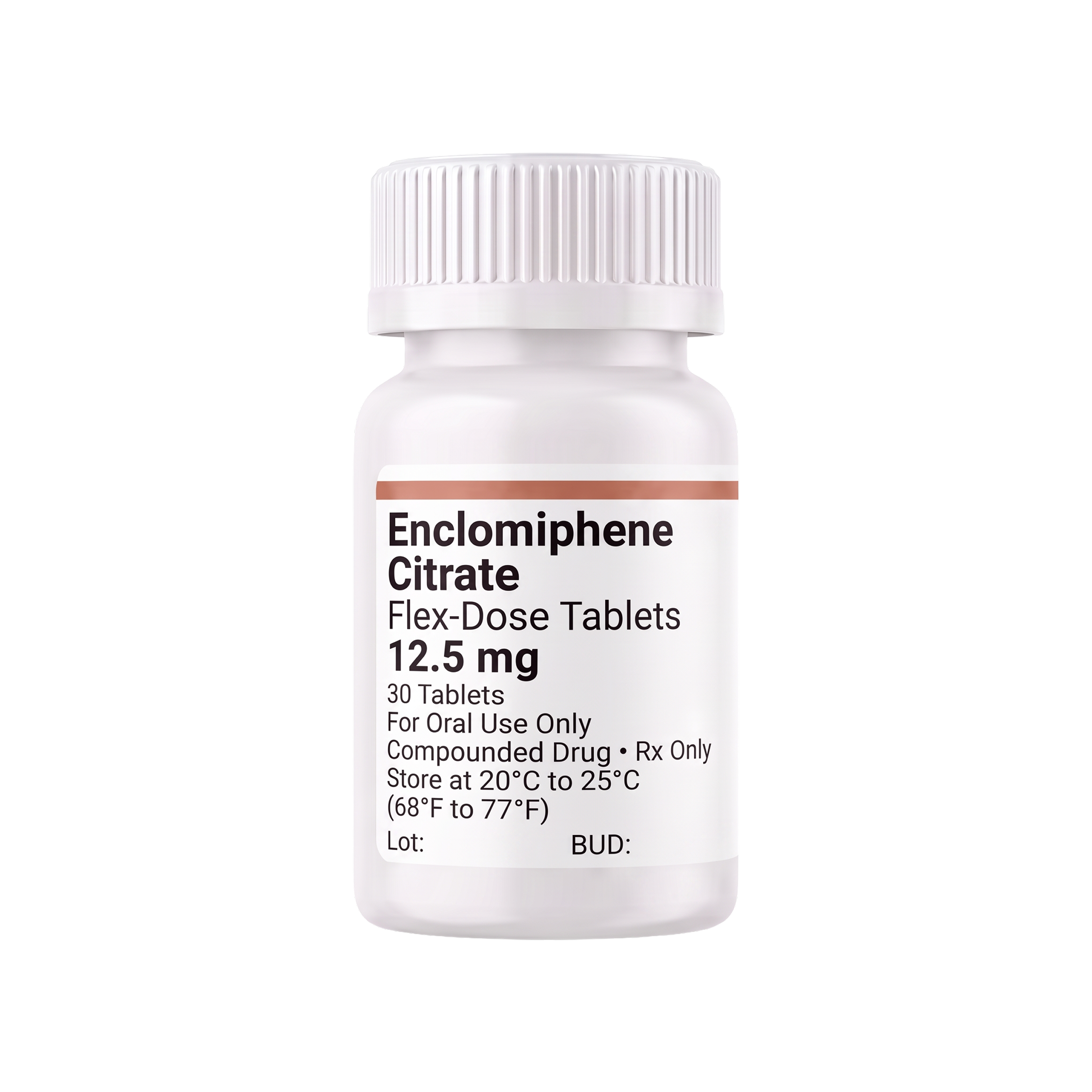
See it before your first visit
Photographs of the medication as dispensed.



What it is
Enclomiphene is a selective estrogen receptor modulator. A licensed provider may prescribe it for men with low testosterone to support the body's own hormone production, based on symptoms, examination and lab results.
This medication is compounded. It is prepared by a licensed pharmacy for an individual patient based on a prescription. Compounded medications are not FDA approved, which means the FDA has not evaluated their safety, effectiveness or quality.
How it works
The brain signals the testicles to make testosterone by releasing two hormones, LH and FSH. Estrogen in the body tells the brain to release less of them.
Enclomiphene blocks estrogen receptors in the brain, so the brain releases more LH and FSH. Unlike testosterone replacement, which supplies testosterone from outside the body, this approach is intended to prompt the body to make more of its own. Your provider sets the dose and adjusts it based on your lab results.
What to expect
Treatment begins only after a provider reviews your symptoms, health history and lab results, including testosterone, LH and FSH levels. Follow-up lab work is part of treatment for as long as you remain on therapy, and doses are adjusted based on those results.
Your provider sets your dose and schedule. Individual responses vary, and results are not guaranteed.
Who it is for
Whether enclomiphene is appropriate for you is a decision made by a licensed provider based on your symptoms, examination, laboratory results and health history. It is not appropriate for everyone, and it is not a treatment for sexual dysfunction on its own.
It is not intended for use in women or children.
This page is general information and is not medical advice.
Side effects
Commonly reported side effects include headache, hot flashes, mood changes, nausea and breast tenderness. Changes in vision, such as blurred vision or seeing spots, have been reported with related medications. Contact your provider promptly about any vision change.
Other risks include blood clots, changes in cholesterol, and allergic reactions. Because the body's testosterone and estrogen levels shift during treatment, your provider will monitor your labs.
This is not a complete list. Ask your provider about the full prescribing information.
Read this before you start
Compounded drugs are not FDA approved. FDA does not review compounded drugs for safety, effectiveness, or quality before marketing.
Medication availability, formulation, packaging and pharmacy fulfillment vary based on the patient's prescription and location.
Compounded medication. This medication is compounded by a licensed pharmacy and is not FDA approved. The FDA has not evaluated compounded medications for safety, effectiveness or quality. It is prescribed for an individual patient by a licensed provider.
Vision. Stop and contact your provider right away if you notice blurred vision, spots or other changes in your eyesight.
Who should not use it. Enclomiphene is not for use in women or children. Tell your provider about liver problems, blood clots, vision problems, and all other medical conditions and medications.
Monitoring. Your provider should monitor your testosterone, estradiol, LH, FSH and other relevant lab values during treatment.
Not medical advice. The information on this page is general and educational. It does not establish a provider relationship and does not replace a consultation with a licensed provider.
Common questions
Is this medication FDA approved?
No. This medication is compounded by a licensed pharmacy, and compounded medications are not FDA approved. The FDA has not evaluated them for safety, effectiveness or quality.
Do I need lab work first?
Yes. A provider reviews your testosterone and related hormone levels and your health history before deciding whether treatment is appropriate. Follow-up labs continue throughout treatment.
How is it different from testosterone replacement?
Testosterone replacement supplies testosterone from outside the body. Enclomiphene is intended to prompt the body to make more of its own. Your provider can explain which approach fits your situation.
Is it a treatment for low libido or sexual dysfunction?
No. Low testosterone can be one of several contributors to sexual health symptoms, and your provider will evaluate the full picture.
What if I have side effects?
Contact your prescribing provider. Do not change your dose on your own, and seek care right away for any change in vision.
%20(1)%20(1)%20(1).png)