Levothyroxine
Compounded levothyroxine sodium (T4), an oral thyroid hormone prescribed by a licensed DrWell provider based on lab work and clinical evaluation, and monitored throughout treatment. Compounded medications are not FDA approved.
Compounded drugs are not FDA approved. FDA does not review compounded drugs for safety, effectiveness, or quality before marketing.

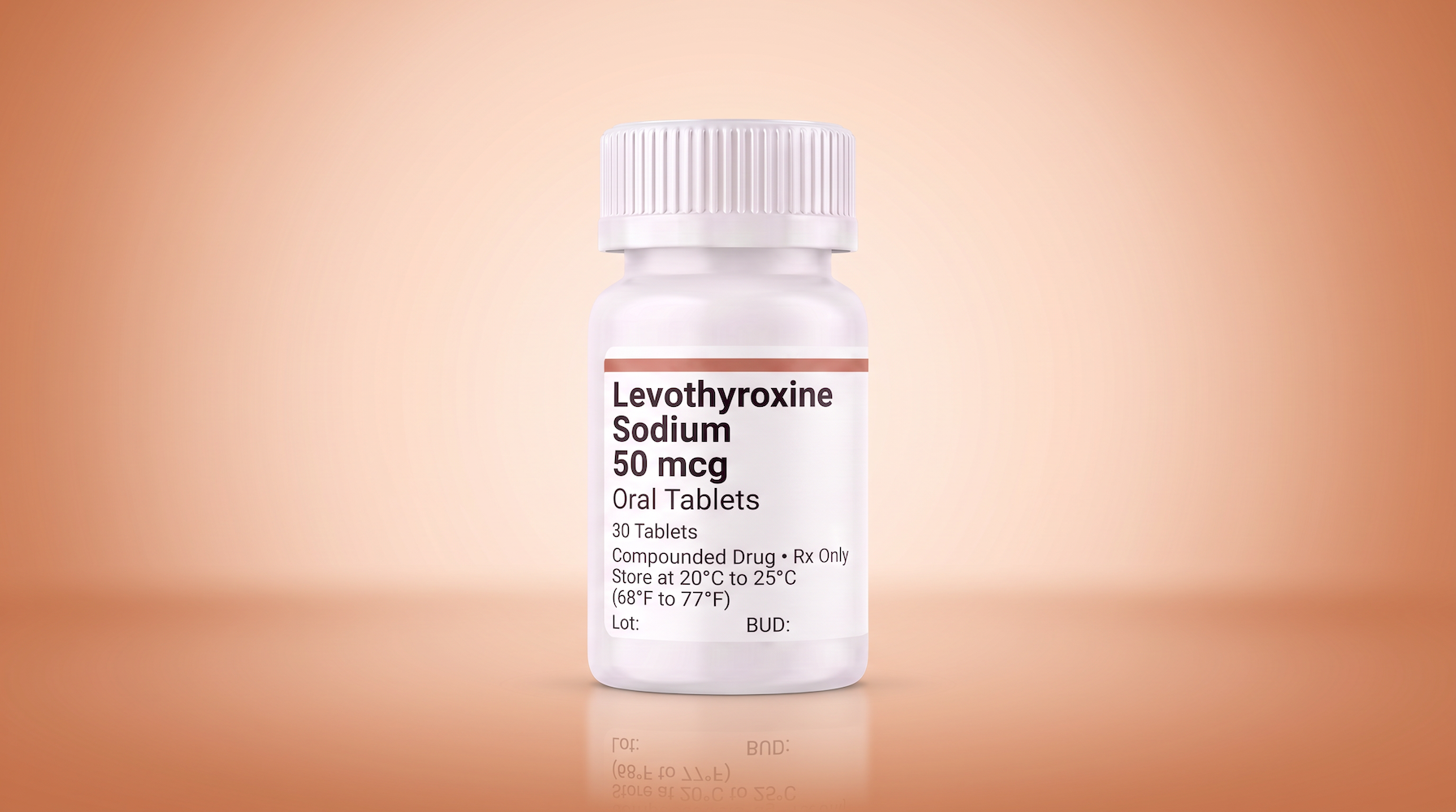
See it before your first visit
Images are for illustrative purposes only. Actual medication appearance, packaging, and labeling may vary by pharmacy.


What it is
Levothyroxine sodium is a form of thyroid hormone, also called T4. A licensed DrWell provider may prescribe it as thyroid hormone replacement for patients with hypothyroidism, including hypothyroidism caused by Hashimoto's disease, based on symptoms, examination and thyroid lab results.
Brand-name levothyroxine products such as Synthroid, Levoxyl and Unithroid are FDA approved. The levothyroxine offered here is compounded. It is prepared by a licensed pharmacy for an individual patient based on a prescription. Compounded medications are not FDA approved, which means the FDA has not evaluated their safety, effectiveness or quality.
How it works
Thyroid hormones help regulate how the body uses energy, including heart rate, body temperature and metabolism. Levothyroxine supplies T4, which the body converts into the more active T3 as needed.
Your provider determines the dose and schedule and may adjust them based on your lab results and how you respond.
What to expect
Treatment begins only after a provider reviews your symptoms, health history and thyroid lab results. Doses are adjusted gradually, and follow-up lab work continues for as long as you remain on therapy. It can take several weeks for levothyroxine to reach its full effect, which is why labs are repeated after dose changes.
Your provider sets your dose and schedule. Individual responses vary, and results are not guaranteed.
The cost of levothyroxine varies. It depends on your prescribed dose, your pharmacy and the lab work involved.
Who it is for
Whether thyroid hormone is appropriate for you is a decision made by a licensed provider based on your symptoms, examination, laboratory results and health history. It is not appropriate for everyone and requires ongoing monitoring.
This page is general information and is not medical advice.
Side effects
Side effects are most often related to too much thyroid hormone and can include a fast or irregular heartbeat, palpitations, chest pain, tremor, anxiety, trouble sleeping, heat intolerance, sweating, headache, diarrhea and weight loss.
Serious effects can include heart rhythm problems, worsening of heart conditions, and reduced bone density with long-term over-treatment. Allergic reactions are possible. Contact your provider promptly about chest pain, a rapid heartbeat or shortness of breath.
This is not a complete list. Ask your provider about the full prescribing information.
Read this before you start
Compounded drugs are not FDA approved. FDA does not review compounded drugs for safety, effectiveness, or quality before marketing.
Medication availability, formulation, packaging and pharmacy fulfillment vary based on the patient's prescription and location.
Boxed warning. Thyroid hormones, including levothyroxine, should not be used for the treatment of obesity or for weight loss. In people with normal thyroid levels, larger doses may produce serious or even life-threatening signs of toxicity, especially when taken with other medications that suppress appetite.
Compounded medication. This medication is compounded by a licensed pharmacy and is not FDA approved. The FDA has not evaluated compounded medications for safety, effectiveness or quality. It is prescribed for an individual patient by a licensed provider.
Who should be cautious. Tell your provider if you have heart disease, high blood pressure, diabetes, adrenal problems, are pregnant or planning to become pregnant, or take blood thinners, diabetes medication, calcium or iron supplements, or other thyroid medication. Doses may need to change.
Monitoring. Your provider should monitor your thyroid lab values and symptoms during treatment.
Not medical advice. The information on this page is general and educational. It does not establish a provider relationship and does not replace a consultation with a licensed provider.
Common questions
What is levothyroxine?
Levothyroxine sodium is a form of thyroid hormone, also called T4. A licensed provider may prescribe it as thyroid hormone replacement for patients with hypothyroidism. The version offered here is compounded.
What is levothyroxine used for?
Levothyroxine is used to replace thyroid hormone in people whose thyroid does not make enough, a condition called hypothyroidism. Hashimoto's disease is a common cause. Your provider confirms the diagnosis with thyroid lab tests.
Is compounded levothyroxine FDA approved?
No. It is compounded by a licensed pharmacy, and compounded medications are not FDA approved. The FDA has not evaluated them for safety, effectiveness or quality. Brand-name products such as Synthroid, Levoxyl and Unithroid are FDA approved.
Is levothyroxine the same as Synthroid?
Synthroid is a brand name for levothyroxine sodium, and it is FDA approved. Compounded levothyroxine contains the same active ingredient but is prepared by a pharmacy for an individual patient and is not FDA approved. Do not switch between products without your provider, because the dose may need to be adjusted.
Do I need lab work first?
Yes. A provider reviews your thyroid lab results and health history before deciding whether treatment is appropriate. Follow-up labs continue throughout treatment.
What is the levothyroxine dosage?
The dose is individualized. Your provider chooses your starting dose, adjusts it gradually based on your labs and symptoms, and tells you how and when to take it. Do not change your dose on your own.
How do I take levothyroxine?
As directed by your prescriber. Levothyroxine is usually taken once daily, and timing around food, coffee and supplements such as calcium and iron can affect how well it is absorbed. Your provider will tell you what applies to you.
How long does levothyroxine take to work?
It builds up gradually. Many people notice changes over several weeks, and your provider typically rechecks labs after a few weeks and after any dose change. Responses vary.
Can I take levothyroxine at night?
Some providers allow bedtime dosing, and others prefer the morning. Ask your provider which timing is right for you, and keep it consistent.
What are the side effects of levothyroxine?
Side effects are most often related to too much thyroid hormone and can include a fast or irregular heartbeat, palpitations, chest pain, tremor, anxiety, trouble sleeping, heat intolerance, sweating, headache, diarrhea and weight loss. See the side effects section above and ask your provider about the full prescribing information.
Does levothyroxine cause weight gain?
Levothyroxine is not a weight gain medication. Hypothyroidism itself can be associated with weight changes, and your weight may shift as your thyroid levels change. Talk to your provider about any weight changes.
Can levothyroxine be used for weight loss?
No. Thyroid hormones should not be used to treat obesity or to lose weight. Taking them for that purpose can cause serious, even life-threatening, toxicity.
How is levothyroxine different from liothyronine or NP Thyroid?
Levothyroxine is T4 only. Liothyronine is T3, the active form. NP Thyroid is a desiccated thyroid tablet that contains both T4 and T3. Your provider can discuss which option fits your situation.
Can I get a levothyroxine prescription from DrWell?
Prescriptions can be written by a licensed DrWell provider after an evaluation of your symptoms, health history and thyroid lab results. Whether treatment is appropriate is the provider's decision.
How much does levothyroxine cost?
Costs vary. They depend on your prescribed dose, your pharmacy and the lab work required. Your DrWell provider can explain what applies to you.
What if I have side effects?
Contact your prescribing provider. Seek urgent care for chest pain, a rapid or irregular heartbeat, or trouble breathing.