
Low-Dose Naltrexone
A compounded low-dose oral naltrexone that a licensed provider may prescribe as part of a longevity and wellness program, based on clinical evaluation. Compounded medications are not FDA approved.
Compounded drugs are not FDA approved. FDA does not review compounded drugs for safety, effectiveness, or quality before marketing.
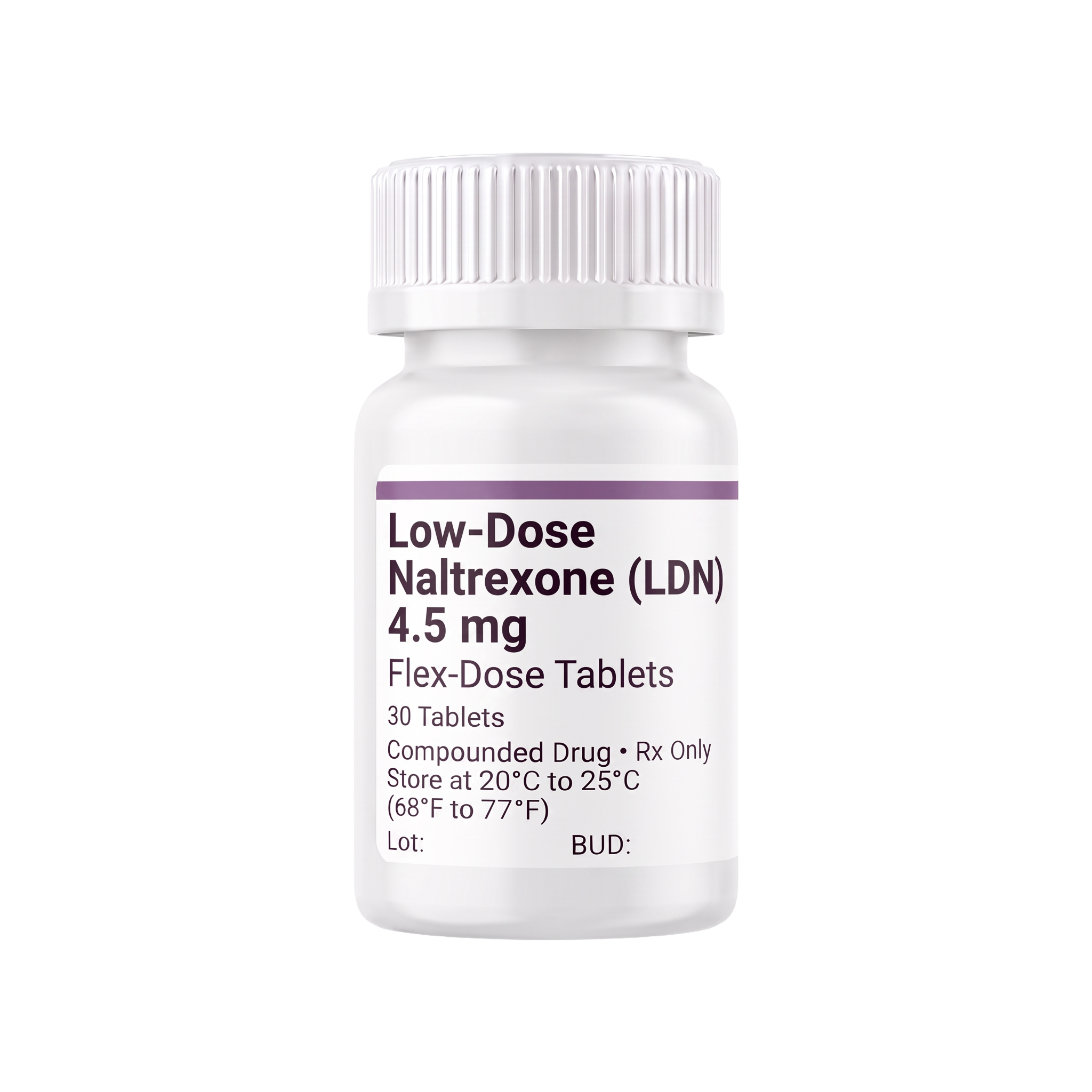
See it before your first visit
Photographs of the medication as dispensed.

What it is
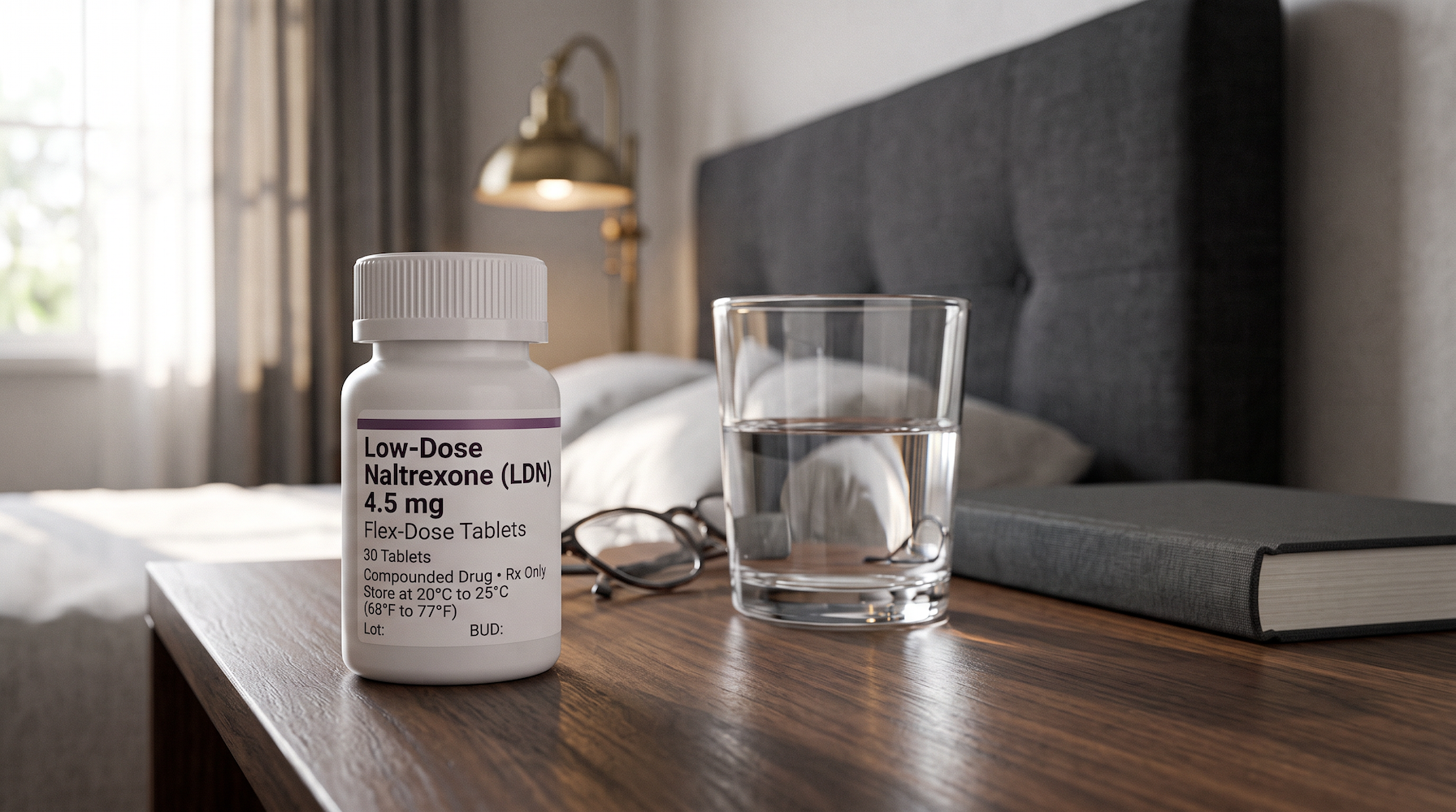
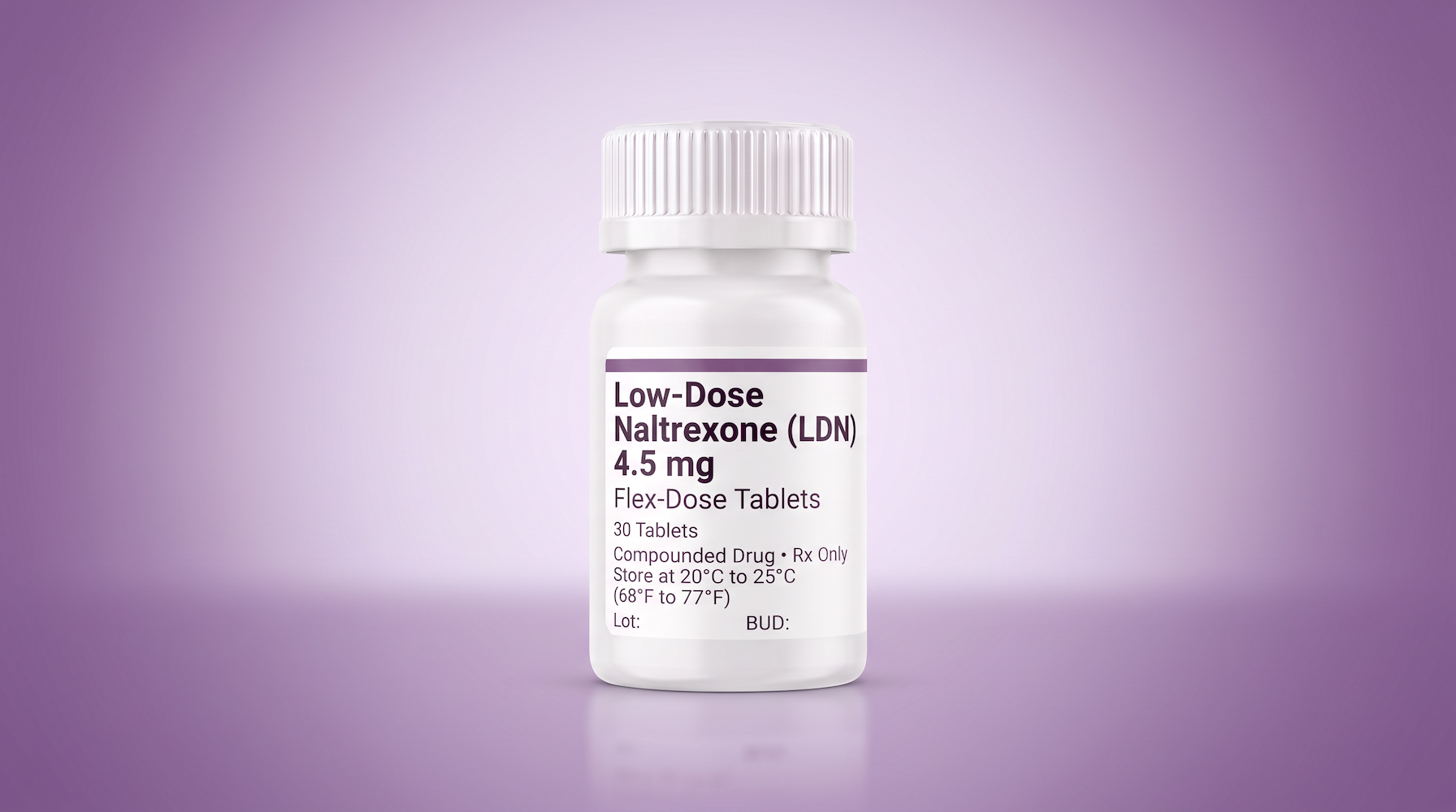
Naltrexone is a medication that blocks opioid receptors. In a compounded low-dose form, prepared at a much smaller strength than standard naltrexone tablets, a licensed provider may prescribe it as part of a longevity and wellness program after reviewing your health history, medications and goals.
This medication is compounded. It is prepared by a licensed pharmacy for an individual patient based on a prescription. Compounded medications are not FDA approved, which means the FDA has not evaluated their safety, effectiveness or quality.
How it works
At standard doses, naltrexone blocks opioid receptors for many hours. Researchers have proposed that at much lower doses it may have different effects, including effects on immune signaling and inflammation. Human evidence for these effects is limited and still developing.
Your provider determines whether low-dose naltrexone is appropriate for you and sets the dose. Doses are usually started low and increased gradually.
What to expect
Your provider will review your health history and current medications before prescribing, and will explain the starting dose and any adjustments. Follow-up visits are part of treatment.
Because human evidence is limited, no specific outcome can be promised. Individual responses vary, and results are not guaranteed.
Who it is for
Whether low-dose naltrexone is appropriate for you is a decision made by a licensed provider based on your health history, medications and goals. It is not appropriate for everyone, including anyone who uses opioid medications or is dependent on opioids.
This page is general information and is not medical advice.
Side effects
Commonly reported side effects include vivid dreams, trouble sleeping, headache, nausea, dizziness, fatigue and anxiety. These often ease after the first weeks, and taking it at a different time of day can help some people.
Serious effects are less common and include liver problems and allergic reactions. Contact your provider promptly about yellowing of the skin or eyes, dark urine, severe stomach pain, trouble breathing or signs of an allergic reaction.
This is not a complete list. Ask your provider about the full prescribing information.
Read this before you start
Compounded drugs are not FDA approved. FDA does not review compounded drugs for safety, effectiveness, or quality before marketing.
Medication availability, formulation, packaging and pharmacy fulfillment vary based on the patient's prescription and location.
Compounded medication. This medication is compounded by a licensed pharmacy and is not FDA approved. The FDA has not evaluated compounded medications for safety, effectiveness or quality. It is prescribed for an individual patient by a licensed provider.
Opioids. Do not use naltrexone if you take opioid medications, including prescription pain medicine, or use opioids. It can block their effect and can trigger sudden, severe withdrawal. Tell your provider about every medication you take, including cough, diarrhea and pain products that may contain opioids.
Emergency pain treatment. Tell any provider who treats you that you take naltrexone, because it can make opioid pain relief ineffective.
Liver health. Naltrexone can affect the liver. Tell your provider if you have liver disease. Your provider may check your liver tests.
Pregnancy and nursing. Tell your provider if you are pregnant, planning to become pregnant or nursing.
Not medical advice. The information on this page is general and educational. It does not establish a provider relationship and does not replace a consultation with a licensed provider.
Common questions
Is low-dose naltrexone FDA approved?
No. This medication is compounded by a licensed pharmacy, and compounded medications are not FDA approved. The FDA has not evaluated them for safety, effectiveness or quality.
How is low-dose different from standard naltrexone?
It is prepared at a much smaller strength than standard naltrexone tablets. Your provider sets the dose and adjusts it over time.
Can I take it with opioid pain medication?
No. Naltrexone blocks opioids and can cause sudden withdrawal in people who use them. Tell your provider about every medication you take.
What time of day should I take it?
As your provider directs. Some people take it at bedtime and others in the morning, depending on how it affects their sleep.
What if I have side effects?
Contact your prescribing provider. Seek urgent care for yellowing of the skin or eyes, trouble breathing or signs of a serious allergic reaction.
%20(1)%20(1)%20(1).png)