
Methylene Blue
A compounded preparation of methylene blue that a licensed provider may prescribe as part of a longevity and wellness program, based on clinical evaluation. Compounded medications are not FDA approved.
Compounded drugs are not FDA approved. FDA does not review compounded drugs for safety, effectiveness, or quality before marketing.

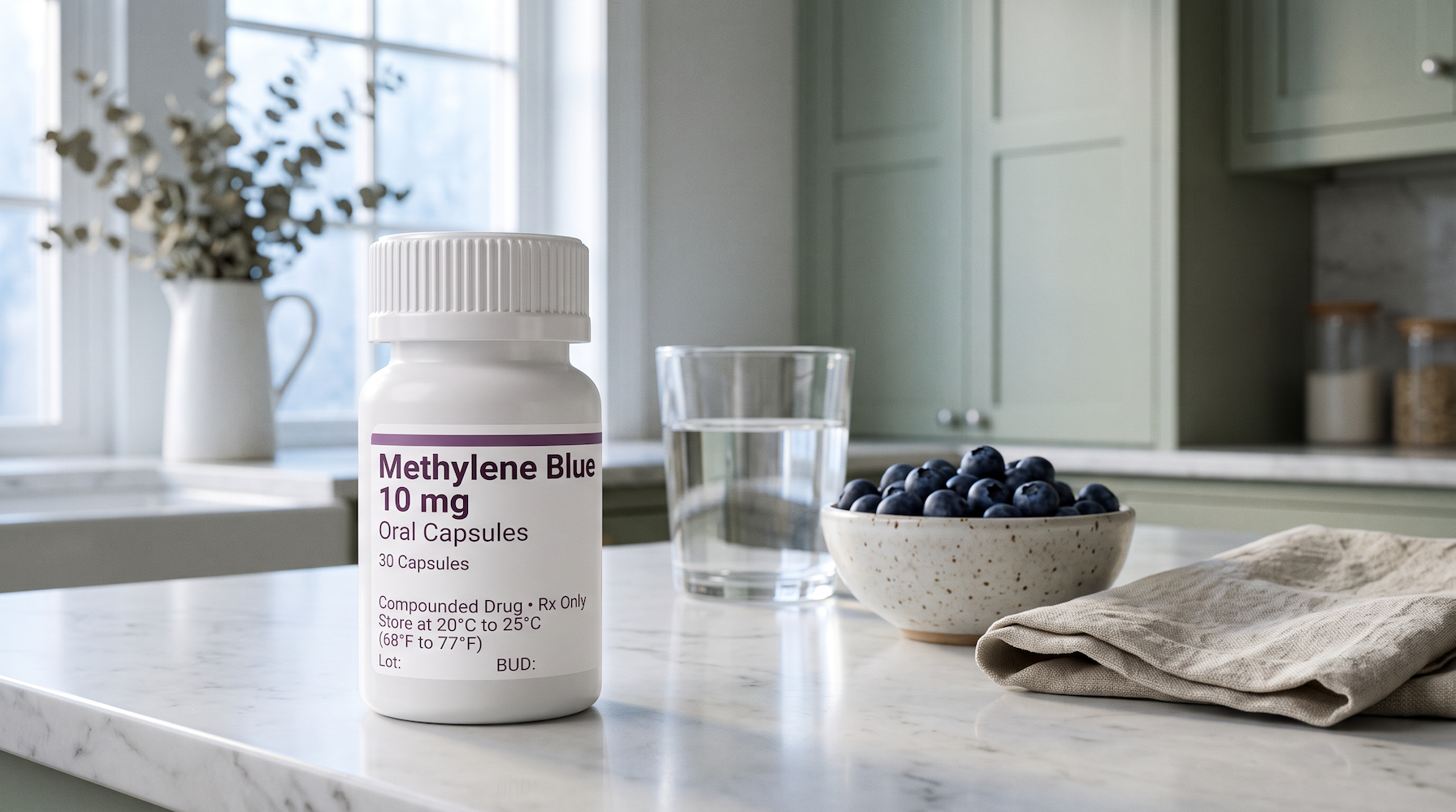
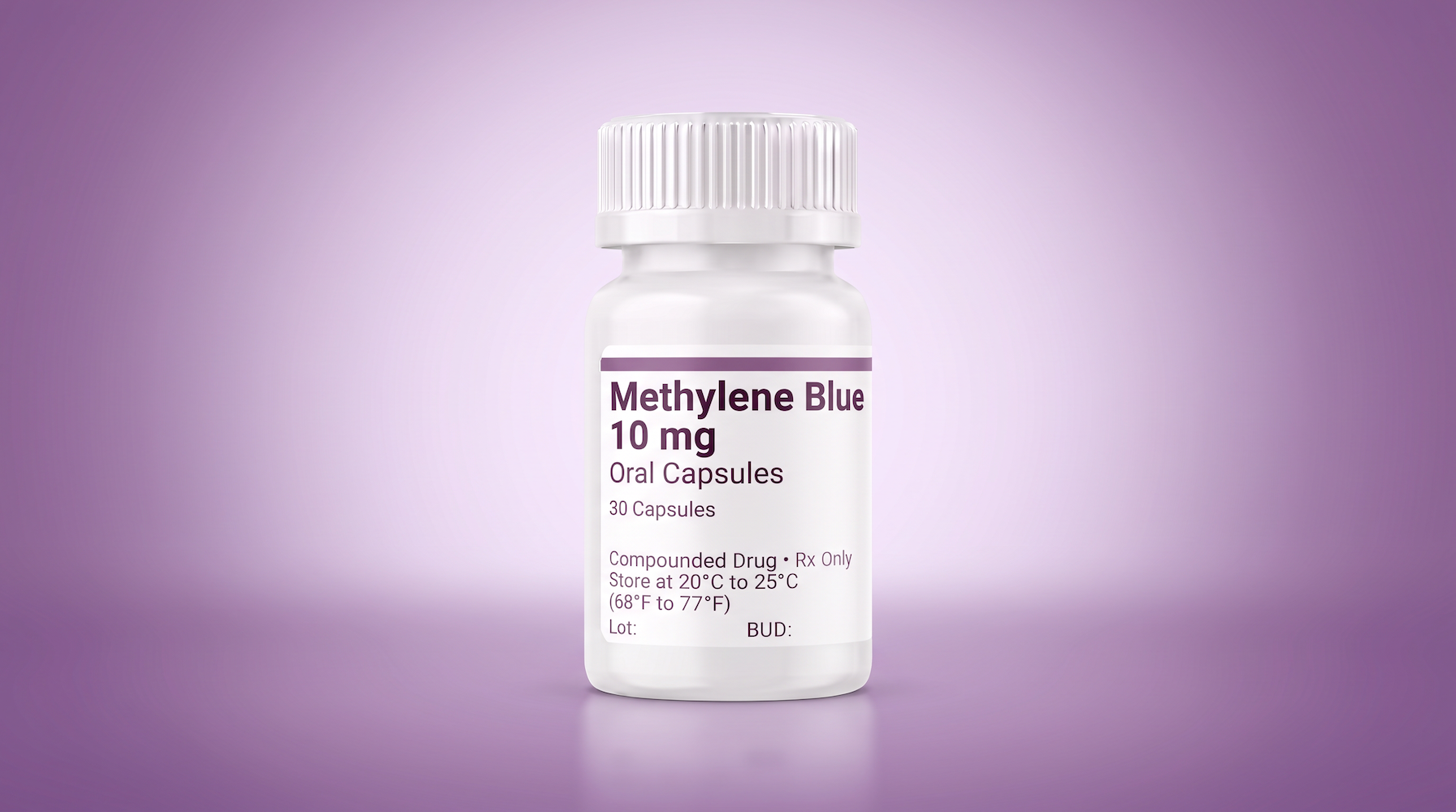
See it before your first visit
Photographs of the medication as dispensed.

What it is
Methylene blue is a synthetic dye that has been used in medicine for more than a century. A licensed provider may prescribe a compounded preparation as part of a longevity and wellness program after reviewing your health history, medications and goals.
Research on methylene blue for wellness and cognitive uses is early, and large, well-controlled human trials are limited.
This medication is compounded. It is prepared by a licensed pharmacy for an individual patient based on a prescription. Compounded medications are not FDA approved, which means the FDA has not evaluated their safety, effectiveness or quality.
How it works
Methylene blue can take part in the way cells produce energy in the mitochondria, and it also inhibits an enzyme called monoamine oxidase (MAO). Laboratory and early human research has explored whether these actions affect cellular energy and brain function.
These effects have not been established for wellness uses. Your provider determines whether methylene blue is appropriate for you and sets the dose.
What to expect
Your provider will review your health history and every medication you take before prescribing, and will explain the dose and how to use it. Follow-up visits are part of treatment.
Methylene blue can turn urine blue or green, and it can temporarily stain the mouth and skin. Because human evidence is limited, no specific outcome can be promised. Individual responses vary, and results are not guaranteed.
Who it is for
Whether methylene blue is appropriate for you is a decision made by a licensed provider based on your health history, medications and goals. It is not appropriate for everyone, including people who take antidepressants or other medications that affect serotonin, and people with G6PD deficiency.
This page is general information and is not medical advice.
Side effects
Commonly reported side effects include blue or green urine, blue staining of the mouth or skin, nausea, headache, dizziness, stomach upset and a burning feeling when urinating.
Serious effects include serotonin syndrome, which can occur when methylene blue is combined with certain medications, and a breakdown of red blood cells in people with G6PD deficiency. Contact your provider or seek urgent care for confusion, a fast heartbeat, fever, muscle stiffness or twitching, severe sweating, trouble breathing, or dark urine with fatigue.
This is not a complete list. Ask your provider about the full prescribing information.
Read this before you start
Compounded drugs are not FDA approved. FDA does not review compounded drugs for safety, effectiveness, or quality before marketing.
Medication availability, formulation, packaging and pharmacy fulfillment vary based on the patient's prescription and location.
Compounded medication. This medication is compounded by a licensed pharmacy and is not FDA approved. The FDA has not evaluated compounded medications for safety, effectiveness or quality. It is prescribed for an individual patient by a licensed provider.
Serotonin syndrome. Methylene blue inhibits an enzyme that breaks down serotonin. Combining it with antidepressants, including SSRIs, SNRIs and MAO inhibitors, and with other serotonergic medications such as certain migraine, pain and cough medicines and some supplements, can cause a dangerous reaction. Tell your provider about every medication and supplement you take.
G6PD deficiency. Do not use if you have G6PD deficiency, a genetic condition that can cause red blood cells to break down. Your provider may test for it.
Pregnancy and nursing. Methylene blue may cause harm to a developing baby. Tell your provider if you are pregnant, planning to become pregnant or nursing.
Limited human evidence. Methylene blue has not been shown in large, well-controlled clinical trials to be safe or effective for wellness or longevity uses. Long-term safety is unknown.
Not medical advice. The information on this page is general and educational. It does not establish a provider relationship and does not replace a consultation with a licensed provider.
Common questions
Is methylene blue FDA approved?
No. This medication is compounded by a licensed pharmacy, and compounded medications are not FDA approved. The FDA has not evaluated them for safety, effectiveness or quality.
Why does it turn my urine blue?
Methylene blue is a dye and is passed in the urine. Blue or green urine is expected. Tell your provider if you also have pain or dark urine.
Can I take it with antidepressants?
Usually no. Methylene blue can interact dangerously with antidepressants and other serotonergic medications. Tell your provider about everything you take before starting.
Is there good evidence for wellness uses?
Research is early, and large, well-controlled human trials are limited. No specific outcome can be promised.
What if I have side effects?
Contact your prescribing provider. Seek urgent care for confusion, fever, muscle stiffness, a fast heartbeat or trouble breathing.
%20(1)%20(1)%20(1).png)