
Olympus
A compounded sublingual tablet combining bremelanotide and oxytocin that a licensed provider may prescribe as part of a sexual wellness program. Compounded medications are not FDA approved.
Compounded drugs are not FDA approved. FDA does not review compounded drugs for safety, effectiveness, or quality before marketing.
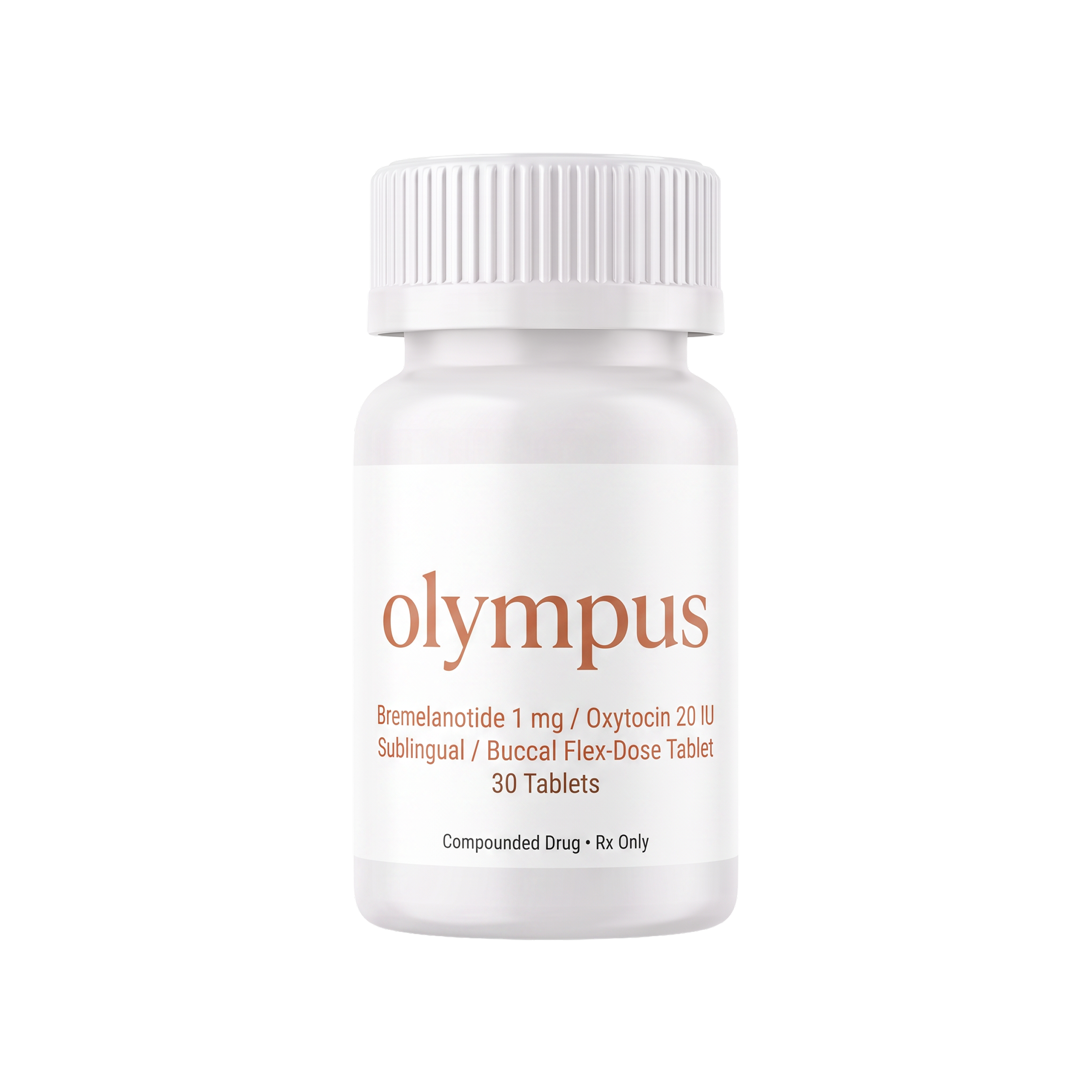
See it before your first visit
Photographs of the medication as dispensed.


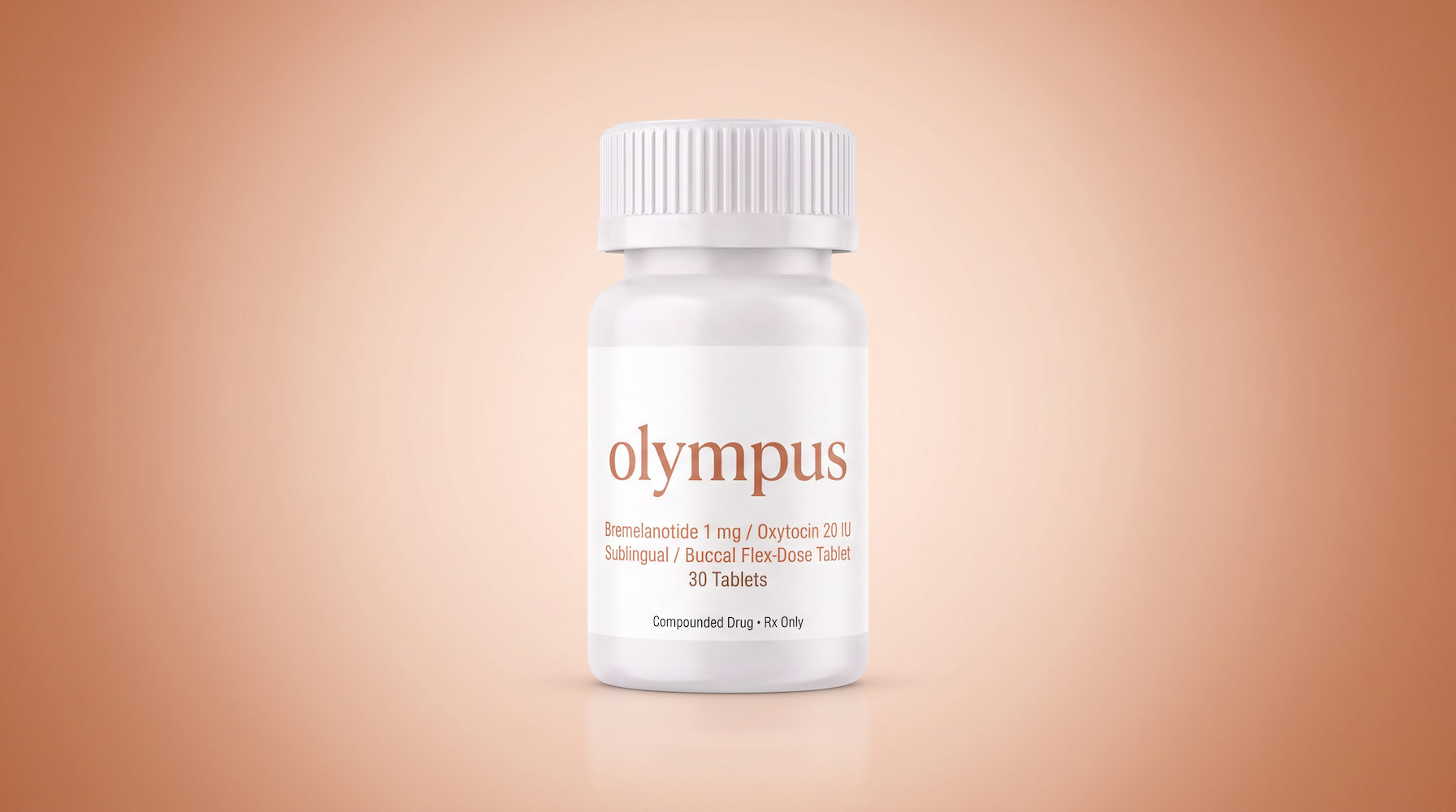
What it is
Olympus is a compounded sublingual tablet that combines two active ingredients: bremelanotide (1 mg) and oxytocin (20 IU). A licensed provider may prescribe it as part of a sexual wellness program after reviewing your symptoms and health history.
This medication is compounded. It is prepared by a licensed pharmacy for an individual patient based on a prescription. Compounded medications are not FDA approved, which means the FDA has not evaluated their safety, effectiveness or quality.
How it works
Bremelanotide acts on melanocortin receptors in the brain, which are involved in desire and arousal. Oxytocin is a hormone involved in bonding and sexual response. The tablet is placed under the tongue and dissolves there, so the ingredients are absorbed through the lining of the mouth.
Your provider determines the dose and how it should be used, and may adjust it based on how you respond.
What to expect
Your provider will review your health history and current medications, including your blood pressure, before prescribing. Your provider will tell you how much of a tablet to use and when, and may change the plan over time.
Individual responses vary, and results are not guaranteed.
Who it is for
Whether Olympus is appropriate for you is a decision made by a licensed provider based on your symptoms, examination and health history. It is not appropriate for everyone, including people with high blood pressure or heart disease and people who are pregnant.
This page is general information and is not medical advice.
Side effects
Commonly reported side effects include nausea, flushing, headache and dizziness. Bremelanotide can cause a temporary increase in blood pressure and a temporary drop in heart rate after use. Repeated use of bremelanotide has been associated with darkening of the skin, including the face, gums and breasts, which may not fade after stopping.
Oxytocin can cause nausea, headache and changes in blood pressure. Allergic reactions are possible. Contact your provider promptly about chest pain, a severe headache, fainting or any sign of an allergic reaction.
This is not a complete list. Ask your provider about the full prescribing information.
Read this before you start
Compounded drugs are not FDA approved. FDA does not review compounded drugs for safety, effectiveness, or quality before marketing.
Medication availability, formulation, packaging and pharmacy fulfillment vary based on the patient's prescription and location.
Compounded medication. This medication is compounded by a licensed pharmacy and is not FDA approved. The FDA has not evaluated compounded medications for safety, effectiveness or quality. It is prescribed for an individual patient by a licensed provider.
Blood pressure and heart health. Bremelanotide can raise blood pressure. Tell your provider if you have high blood pressure, heart disease or a history of stroke, and about all medications you take. Your provider may check your blood pressure during treatment.
Pregnancy. Do not use if you are pregnant or may become pregnant unless your provider directs otherwise.
Skin darkening. Repeated use may cause lasting darkening of the skin. Tell your provider if you notice skin color changes.
Not medical advice. The information on this page is general and educational. It does not establish a provider relationship and does not replace a consultation with a licensed provider.
Common questions
Is Olympus FDA approved?
No. Olympus is compounded by a licensed pharmacy, and compounded medications are not FDA approved. The FDA has not evaluated them for safety, effectiveness or quality.
What is in it?
Olympus combines bremelanotide (1 mg) and oxytocin (20 IU) in a sublingual tablet.
How is it taken?
The tablet is placed under the tongue and allowed to dissolve. Your provider will tell you how much to use and when.
Who should not use it?
People with high blood pressure, heart disease or a history of stroke, and people who are pregnant, should talk with a provider before use. Your provider will decide whether it is appropriate for you.
What if I have side effects?
Contact your prescribing provider. Do not change your dose on your own, and seek urgent care for chest pain, fainting or signs of an allergic reaction.
%20(1)%20(1)%20(1).png)