
Progesterone Cream
A compounded progesterone cream applied to the skin that a licensed provider may prescribe as part of a hormone therapy program, based on lab work and clinical evaluation. Compounded medications are not FDA approved.
Compounded drugs are not FDA approved. FDA does not review compounded drugs for safety, effectiveness, or quality before marketing.
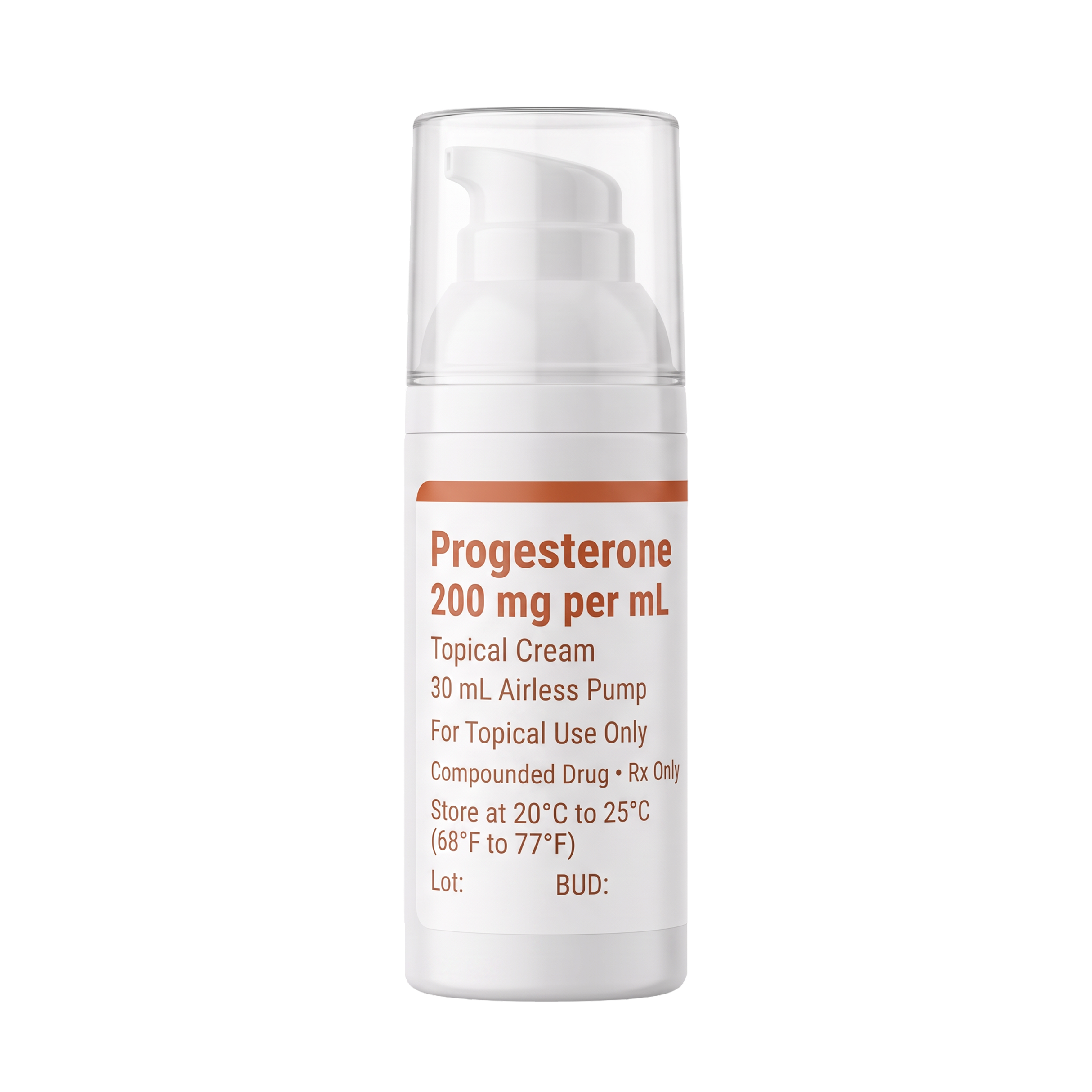
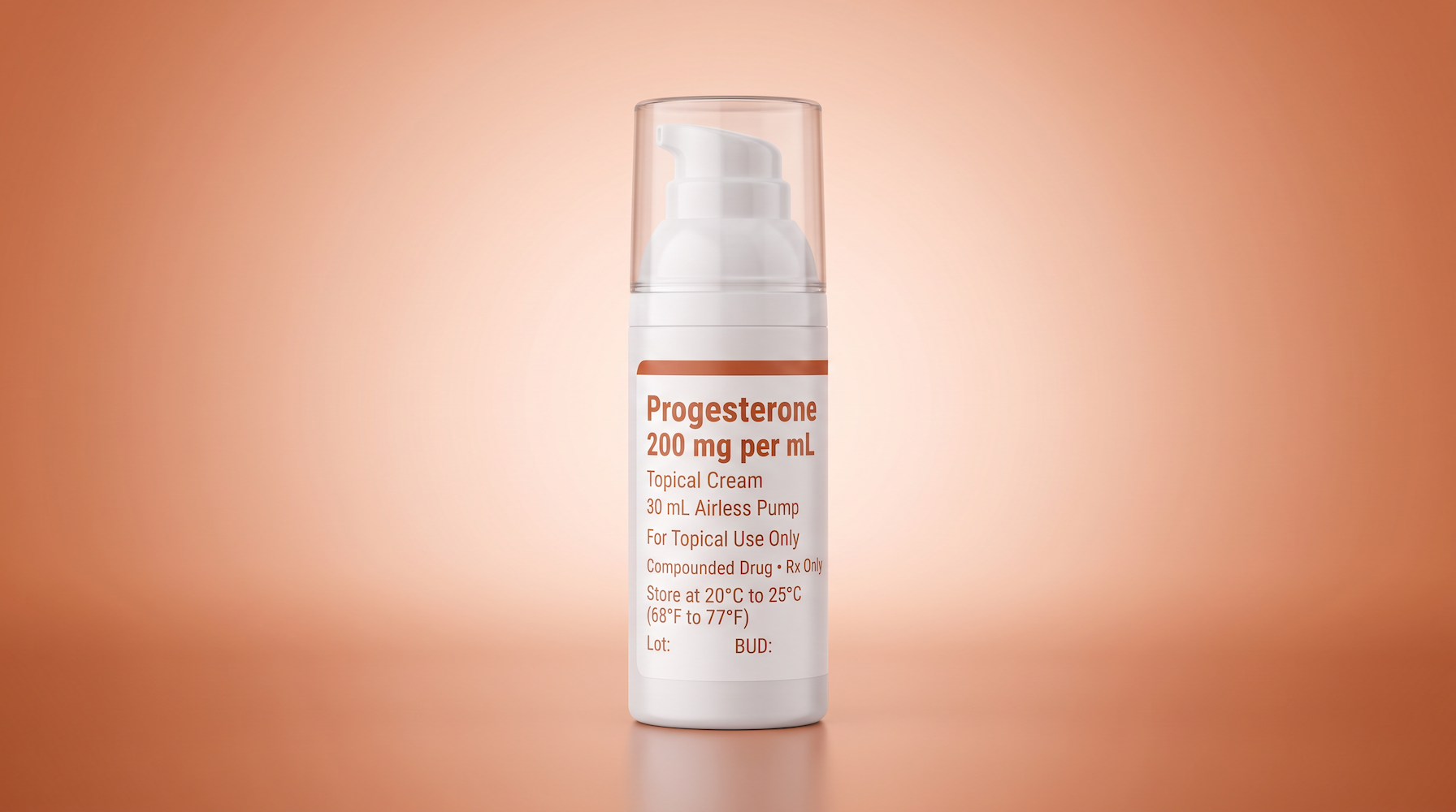
See it before your first visit
Photographs of the medication as dispensed.


What it is
Progesterone is a hormone the body makes naturally, mainly in the ovaries. A topical cream delivers it through the skin. A licensed provider may prescribe it as part of a hormone therapy program, based on your symptoms, examination, lab results and health history.
This medication is compounded. It is prepared by a licensed pharmacy for an individual patient based on a prescription. Compounded medications are not FDA approved, which means the FDA has not evaluated their safety, effectiveness or quality.
How it works
The cream is applied to the skin and the progesterone is absorbed through it into the bloodstream, without passing through the digestive system first.
Absorption through the skin can vary from person to person and with where and how the cream is applied. Your provider determines the dose, where to apply it and how often, and adjusts the plan based on your symptoms and lab results.
What to expect
Treatment begins only after a provider reviews your symptoms, health history and lab results. Follow-up appointments and lab work are part of treatment for as long as you remain on therapy, and the dose may be adjusted over time.
Your provider will explain where to apply the cream, how much to use and how to rotate sites. Individual responses vary, and results are not guaranteed.
Who it is for
Whether progesterone is appropriate for you is a decision made by a licensed provider based on your symptoms, examination, laboratory results and health history. It is not appropriate for everyone, including people with certain cancers, blood clots or unexplained vaginal bleeding.
This page is general information and is not medical advice.
Side effects
Commonly reported side effects include skin irritation or redness where the cream is applied, drowsiness, dizziness, headache, breast tenderness, bloating, mood changes and irregular bleeding or spotting.
Serious risks include blood clots, stroke, heart attack, liver problems and allergic reactions. Contact your provider promptly about chest pain, shortness of breath, sudden vision changes, severe headache, leg pain or swelling, a breast lump, or unusual vaginal bleeding.
This is not a complete list. Ask your provider about the full prescribing information.
Read this before you start
Compounded drugs are not FDA approved. FDA does not review compounded drugs for safety, effectiveness, or quality before marketing.
Medication availability, formulation, packaging and pharmacy fulfillment vary based on the patient's prescription and location.
Boxed warning. Progestogens used together with estrogens have been associated with an increased risk of cardiovascular disorders including stroke and blood clots, breast cancer and probable dementia. Hormone therapy should be used at the lowest effective dose for the shortest duration consistent with treatment goals, and your provider should review the need for treatment regularly.
Compounded medication. This medication is compounded by a licensed pharmacy and is not FDA approved. The FDA has not evaluated compounded medications for safety, effectiveness or quality. It is prescribed for an individual patient by a licensed provider.
Variable absorption. Hormone levels from topical products can vary. Your provider may check your levels to confirm the dose is appropriate.
Skin contact. Wash your hands after applying the cream. Avoid contact between treated skin and other people, children and pets until the cream has dried or been absorbed, as directed by your provider.
Who should not use it. Progesterone should not be used by people with undiagnosed abnormal vaginal bleeding, known or suspected breast cancer, a history of blood clots, stroke or heart attack, active liver disease, or who are pregnant. Tell your provider about any allergies, including to ingredients in the cream.
Monitoring. Your provider should monitor your health, blood pressure and relevant lab values during treatment.
Not medical advice. The information on this page is general and educational. It does not establish a provider relationship and does not replace a consultation with a licensed provider.
Common questions
Is this medication FDA approved?
No. This medication is compounded by a licensed pharmacy, and compounded medications are not FDA approved. The FDA has not evaluated them for safety, effectiveness or quality.
How is it different from the capsule?
The cream is absorbed through the skin, while the capsule is swallowed and processed by the digestive system and liver. Your provider can explain which form fits your situation.
Where do I apply it?
Your provider will tell you where to apply it, how much to use and how to rotate sites. Do not change the amount or schedule on your own.
Do I need lab work first?
Your provider reviews your symptoms, health history and any needed lab results before deciding whether treatment is appropriate. Follow-up care continues throughout treatment.
What if I have side effects?
Contact your prescribing provider. Seek urgent care for chest pain, shortness of breath, sudden vision changes, or leg pain or swelling.
%20(1)%20(1)%20(1).png)