
Sermorelin Injection
A compounded sermorelin injection that a licensed provider may prescribe as part of a longevity and wellness program, based on lab work and clinical evaluation. Compounded medications are not FDA approved.
Compounded drugs are not FDA approved. FDA does not review compounded drugs for safety, effectiveness, or quality before marketing.
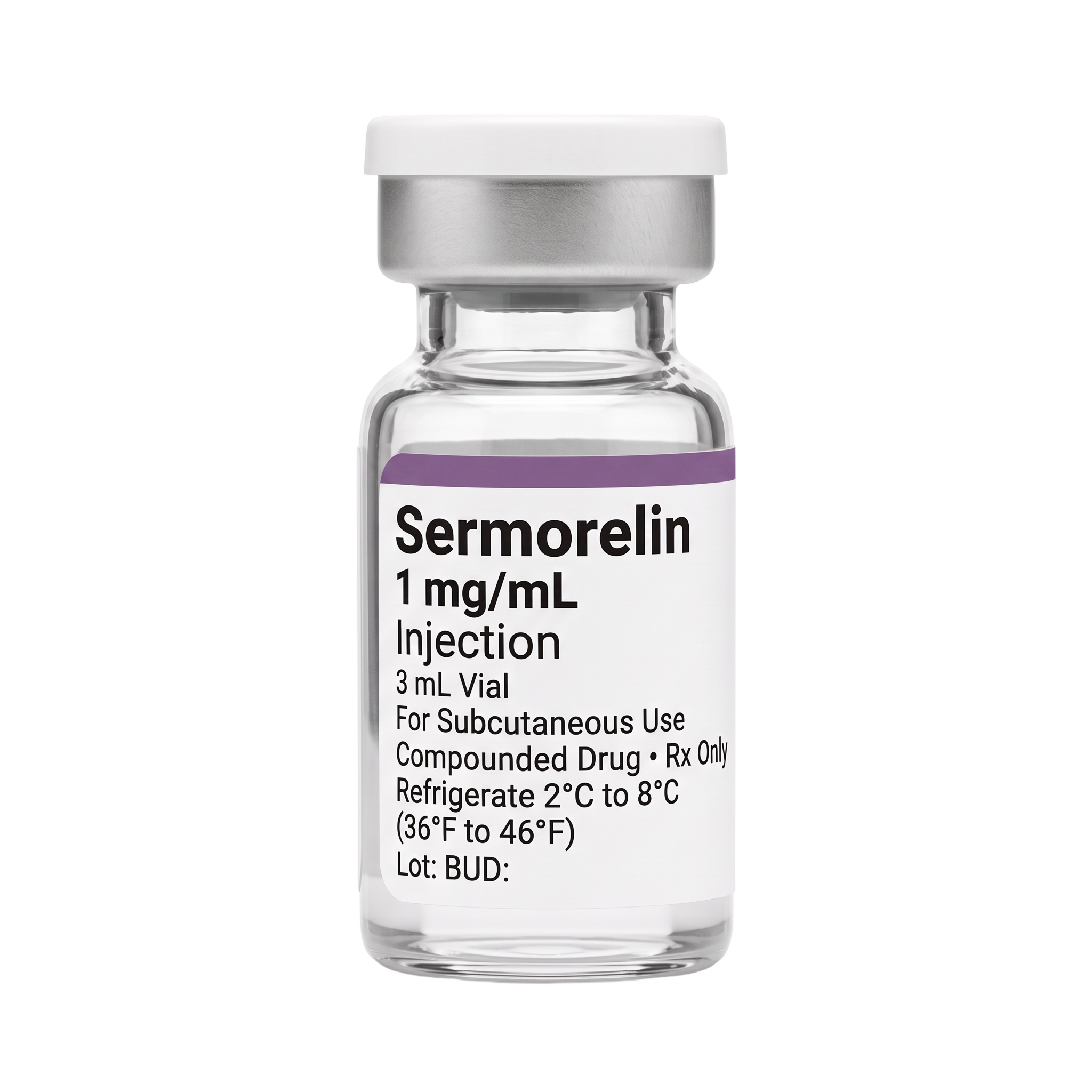
See it before your first visit
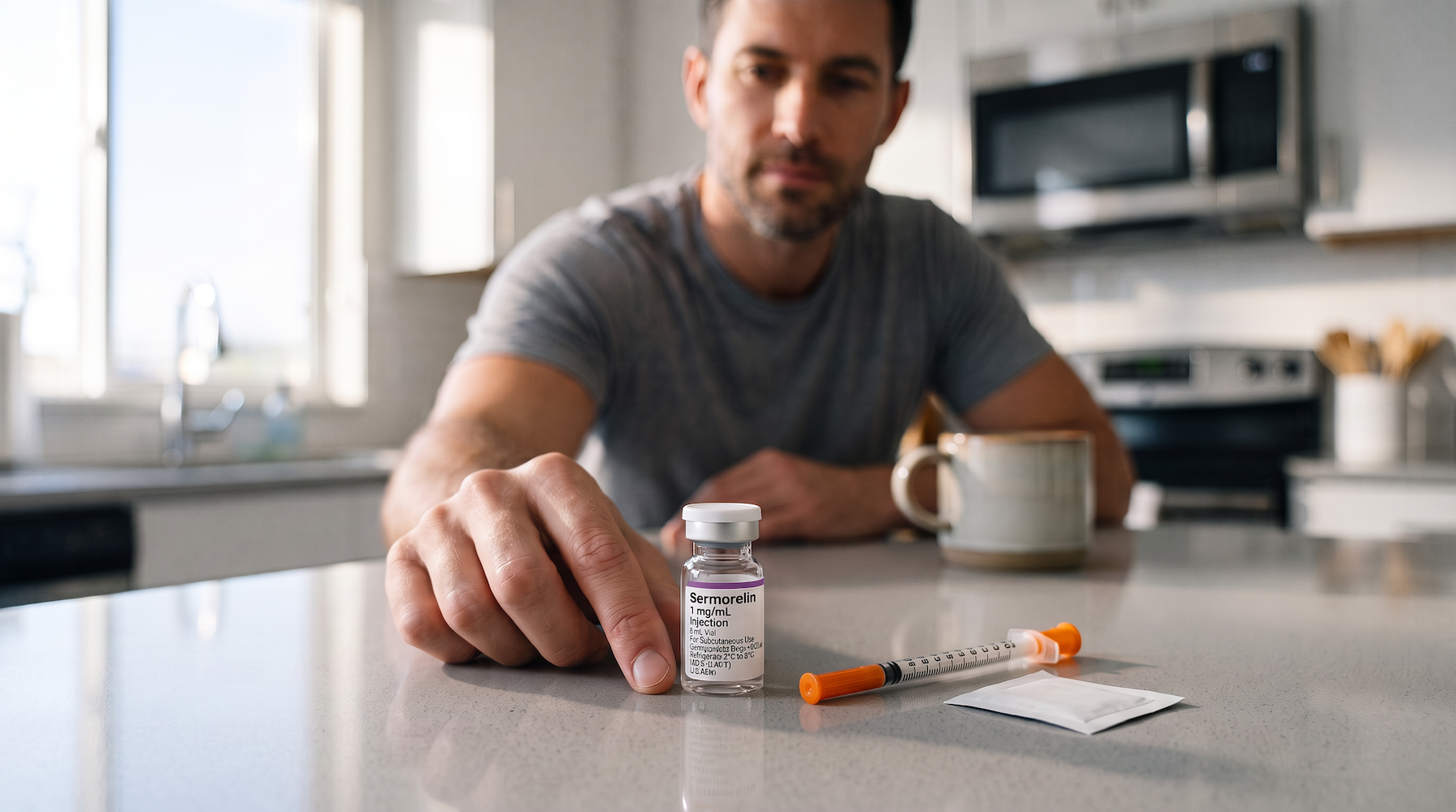
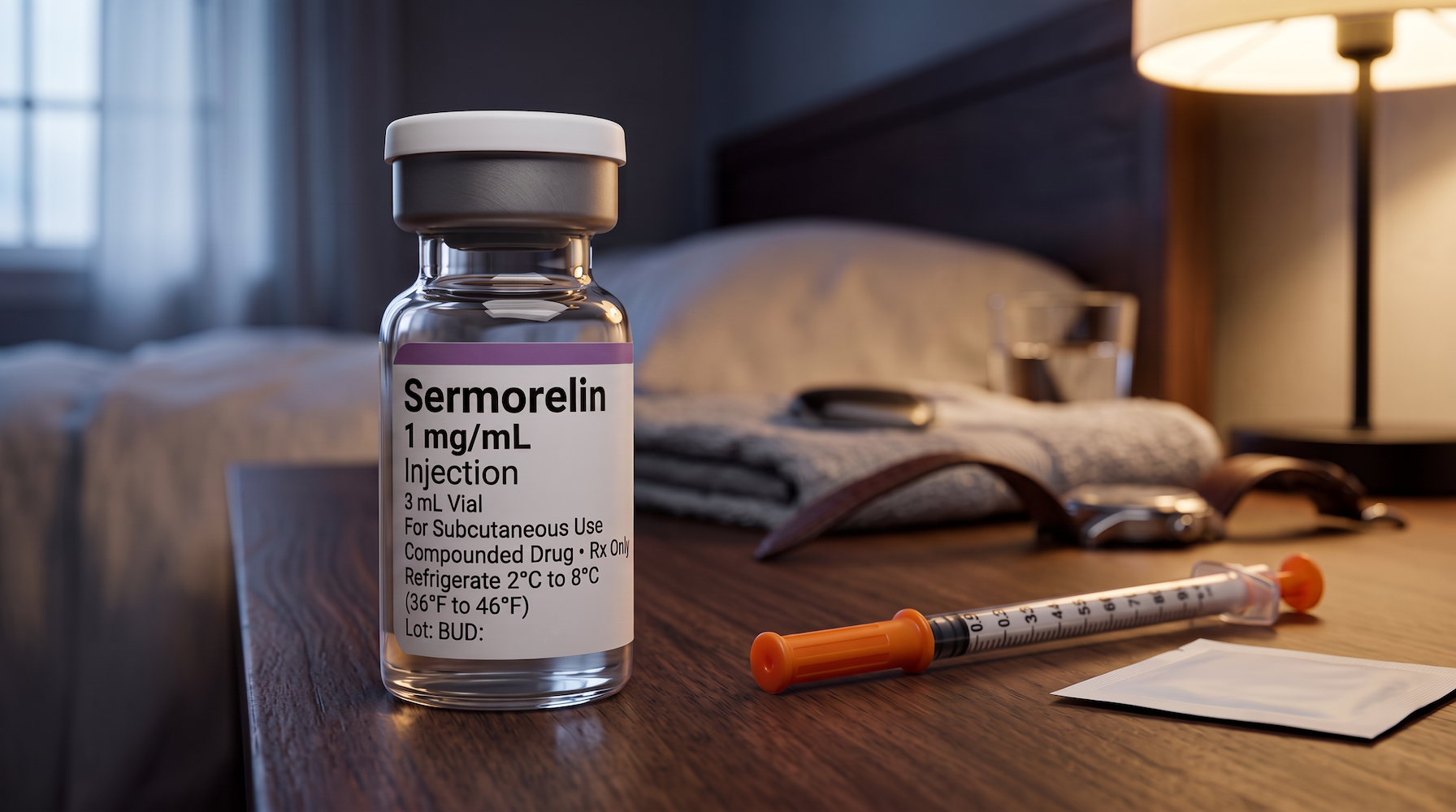
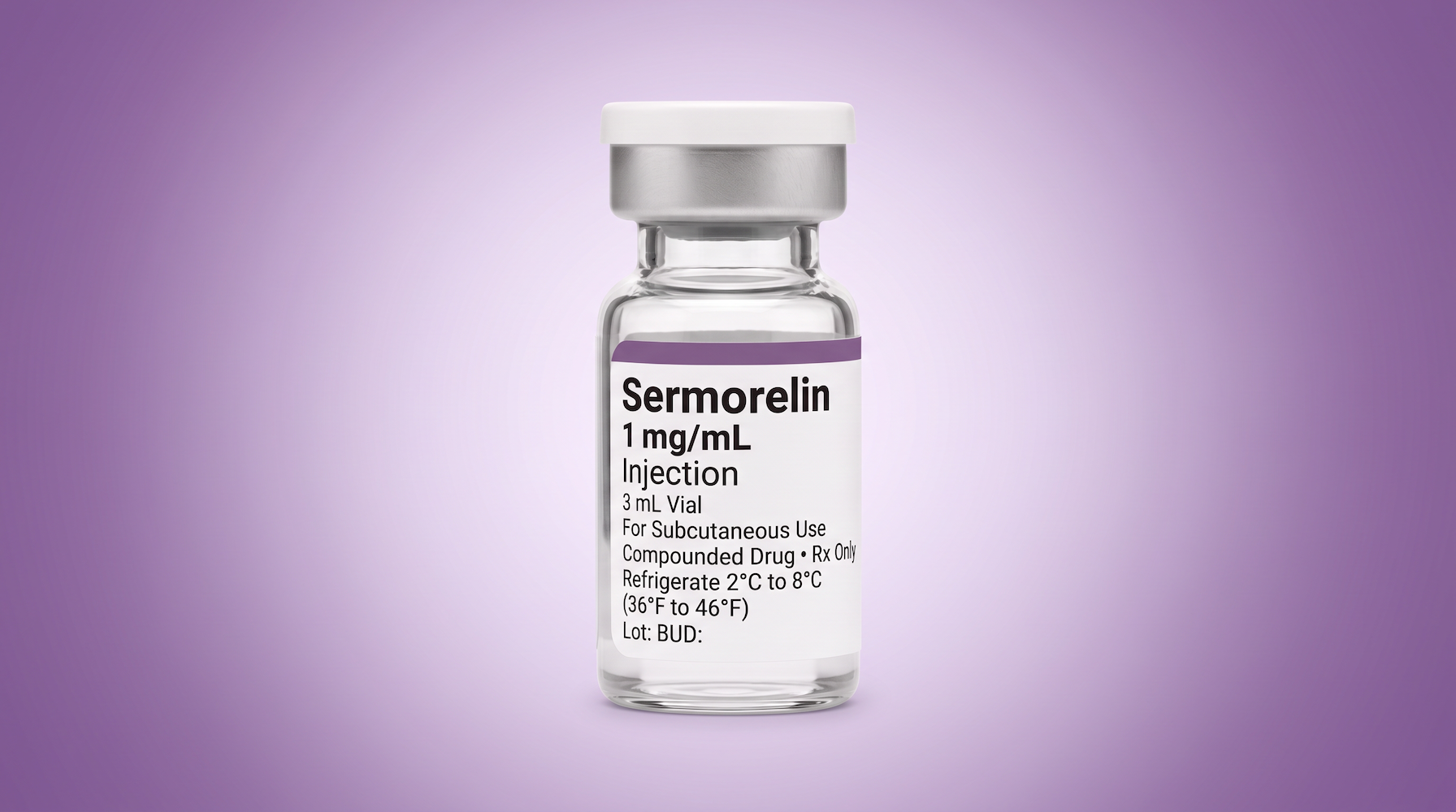
Photographs of the medication as dispensed.
What it is
Sermorelin is a synthetic peptide that mimics growth hormone releasing hormone (GHRH), a natural signal from the brain. A licensed provider may prescribe it as part of a longevity and wellness program after reviewing your symptoms, health history, medications and lab results.
This medication is compounded. It is prepared by a licensed pharmacy for an individual patient based on a prescription. Compounded medications are not FDA approved, which means the FDA has not evaluated their safety, effectiveness or quality.
How it works
The pituitary gland releases growth hormone in response to GHRH. Growth hormone levels decline with age. Sermorelin acts on the same receptors as natural GHRH, which prompts the pituitary to release growth hormone itself, rather than supplying growth hormone from outside the body.
It has not been established that this improves health outcomes in adults who are otherwise healthy. Your provider determines whether sermorelin is appropriate for you and sets the dose.
What to expect
Your provider will review your health history, medications and relevant lab work before prescribing, and will explain the dose, how to inject and how to rotate sites. Follow-up visits and lab work are part of treatment.
Because human evidence is limited, no specific outcome can be promised. Individual responses vary, and results are not guaranteed.
Who it is for
Whether sermorelin is appropriate for you is a decision made by a licensed provider based on your symptoms, health history, medications and laboratory results. It is not appropriate for everyone, including people with active cancer and people who are pregnant or nursing.
This page is general information and is not medical advice.
Side effects
Commonly reported side effects include redness, pain, itching or swelling at the injection site, headache, flushing, dizziness and nausea. Some people notice a brief feeling of tightness in the throat or trouble swallowing after injection.
Allergic reactions are possible. Contact your provider promptly about trouble breathing, swelling of the face or throat, a spreading rash, fainting, or symptoms of low thyroid function such as unusual tiredness, cold intolerance or weight gain.
This is not a complete list. Ask your provider about the full prescribing information.
Read this before you start
Compounded drugs are not FDA approved. FDA does not review compounded drugs for safety, effectiveness, or quality before marketing.
Medication availability, formulation, packaging and pharmacy fulfillment vary based on the patient's prescription and location.
Compounded medication. This medication is compounded by a licensed pharmacy and is not FDA approved. The FDA has not evaluated compounded medications for safety, effectiveness or quality. It is prescribed for an individual patient by a licensed provider.
Limited human evidence. Sermorelin has not been shown in large, well-controlled clinical trials to be safe or effective for wellness or longevity uses in healthy adults. Long-term safety is unknown.
Cancer. Do not use if you have an active cancer. Tell your provider if you have a history of cancer, because growth hormone signaling can affect cell growth.
Thyroid. Sermorelin may be less effective, and thyroid levels may change, in people with an underactive thyroid. Your provider may check your thyroid function.
Blood sugar. Growth hormone can affect blood sugar. Tell your provider if you have diabetes or take diabetes medication.
Pregnancy and nursing. Do not use if you are pregnant, planning to become pregnant or nursing unless your provider directs otherwise.
Injection safety. Use only as directed by your provider. Do not reuse needles or share injection supplies.
Not medical advice. The information on this page is general and educational. It does not establish a provider relationship and does not replace a consultation with a licensed provider.
Common questions
Is sermorelin FDA approved?
No. This medication is compounded by a licensed pharmacy, and compounded medications are not FDA approved. The FDA has not evaluated them for safety, effectiveness or quality.
Is it the same as growth hormone?
No. Sermorelin prompts the pituitary gland to release growth hormone itself. It does not supply growth hormone from outside the body.
Does it slow aging?
That has not been shown. No specific outcome can be promised, and individual responses vary.
Do I need lab work first?
Your provider reviews your symptoms, health history and any needed lab results before deciding whether treatment is appropriate. Follow-up care continues throughout treatment.
What if I have side effects?
Contact your prescribing provider. Seek urgent care for trouble breathing or signs of a serious allergic reaction.
%20(1)%20(1)%20(1).png)