
Testosterone Cypionate
A compounded testosterone injection prescribed by a licensed provider for testosterone replacement and monitored with regular lab work. Compounded medications are not FDA approved.
Compounded drugs are not FDA approved. FDA does not review compounded drugs for safety, effectiveness, or quality before marketing.
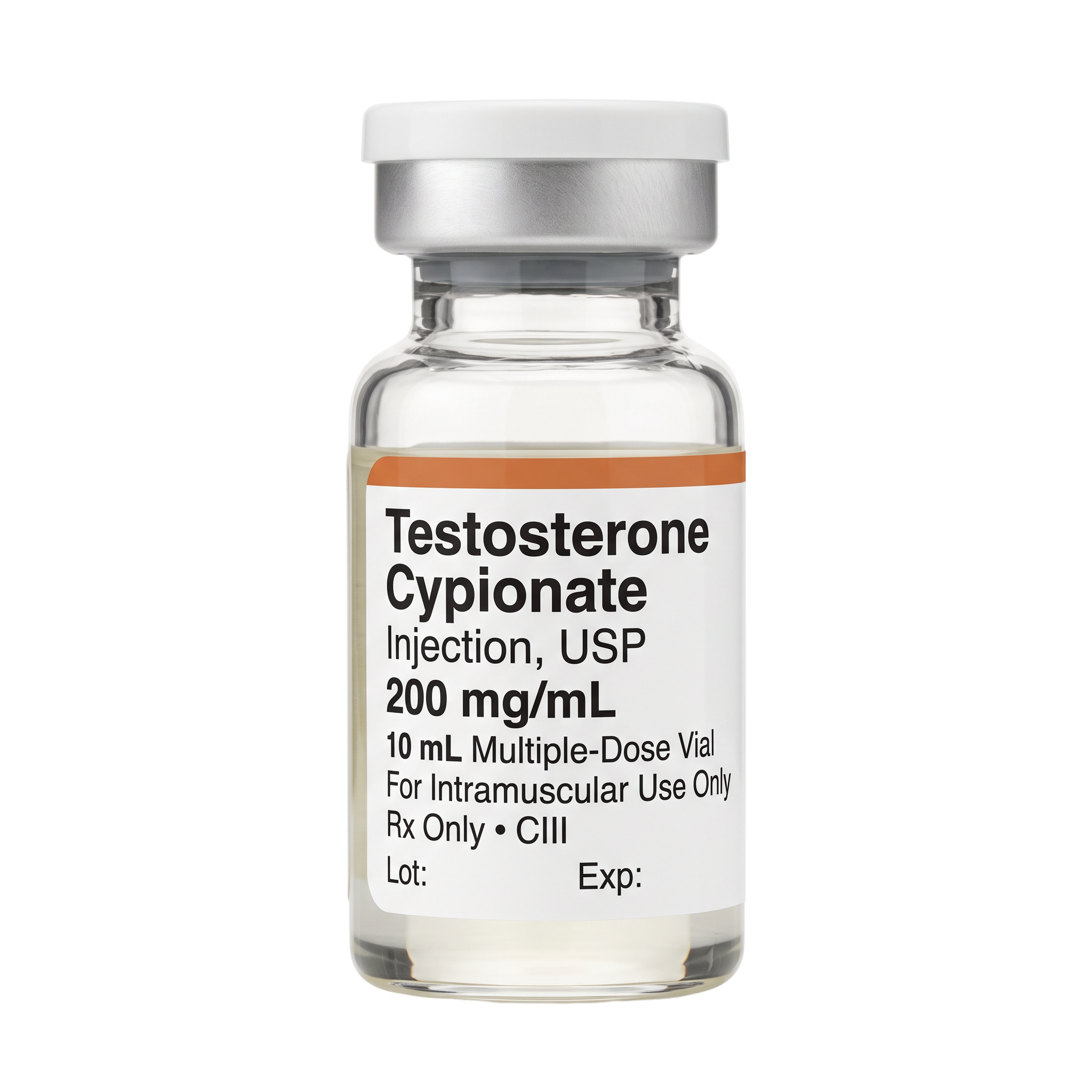
See it before your first visit
Photographs of the medication as dispensed.

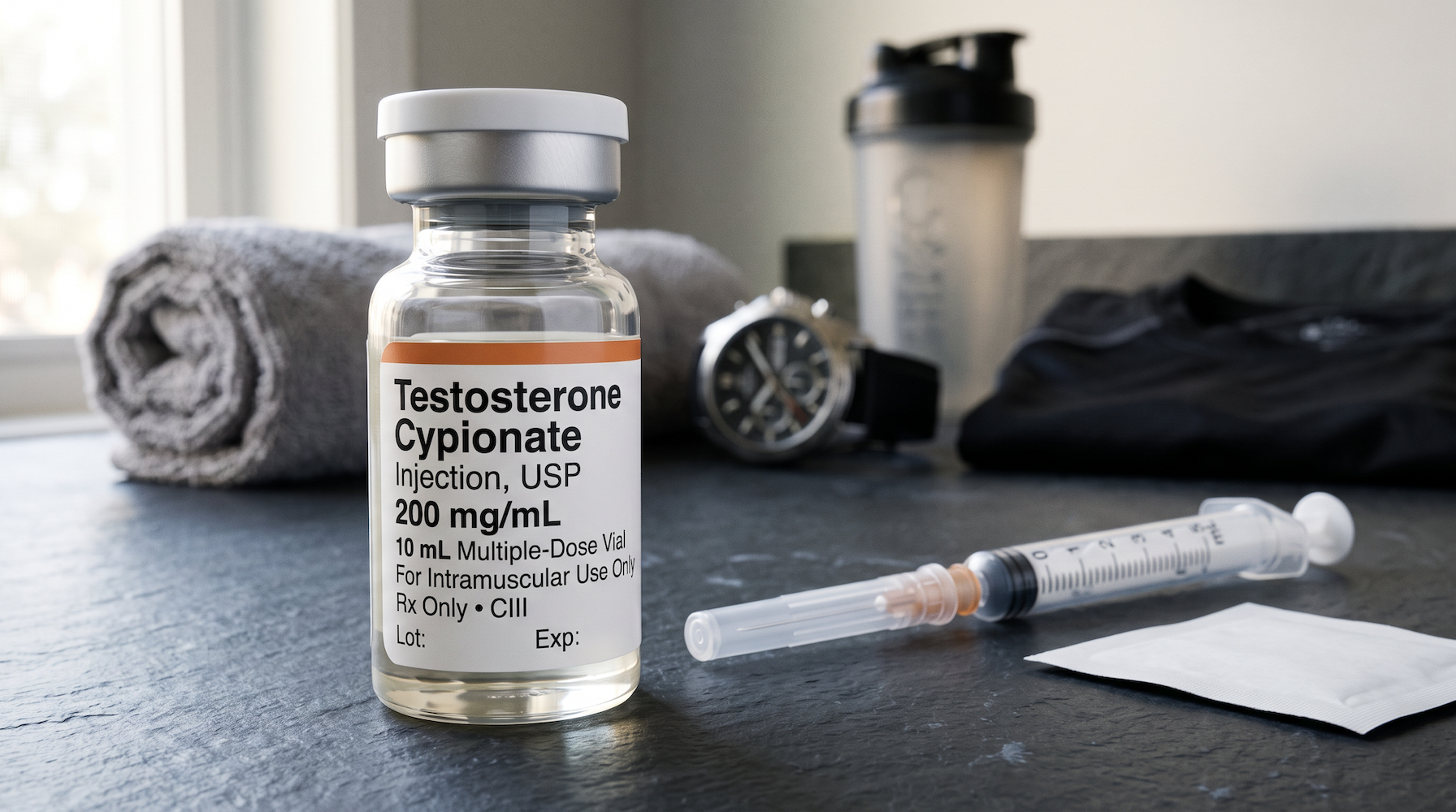
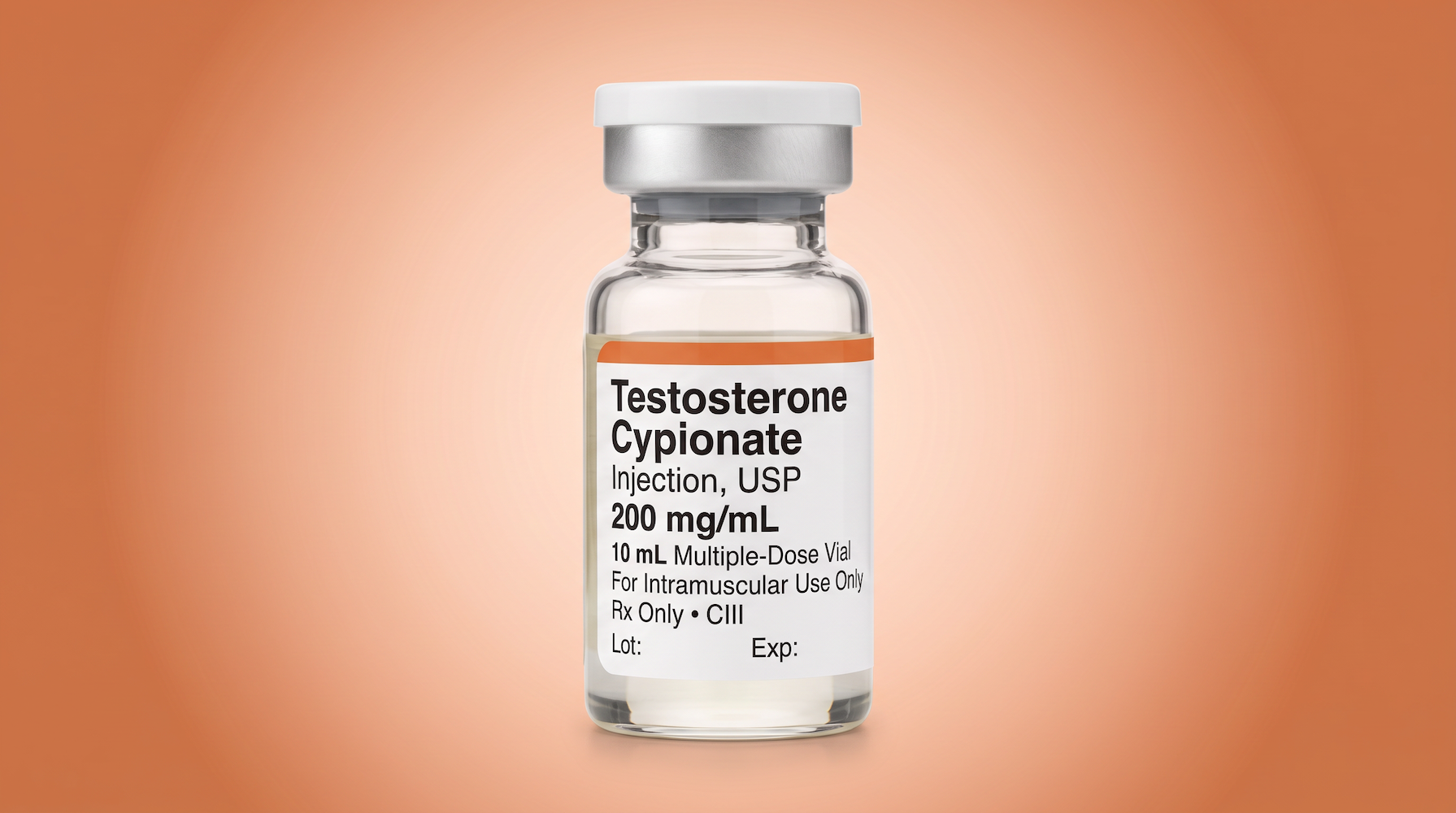
What it is
Testosterone cypionate is a form of testosterone prescribed by a licensed provider as testosterone replacement for patients with clinically diagnosed low testosterone (hypogonadism).
This medication is compounded. It is prepared by a licensed pharmacy for an individual patient based on a prescription. Compounded medications are not FDA approved, which means the FDA has not evaluated their safety, effectiveness or quality.
Testosterone is a Schedule III controlled substance in the United States. Prescribing, dispensing and refills are subject to federal and state controls, and requirements vary by state.
How it works
Testosterone cypionate is an ester, which means the testosterone is bound to a fatty acid chain that slows its release into the body after injection. Because it is released gradually, it is not taken daily.
Your provider determines the dose and the time between injections and may adjust them based on your lab results and how you respond.
What to expect
Treatment begins only after laboratory testing confirms low testosterone together with a diagnosis of hypogonadism. Follow-up lab work is part of treatment and continues for as long as you remain on therapy.
Your provider sets your dose and schedule and reviews your results over time. Individual responses vary, and results are not guaranteed.
Who it is for
Whether testosterone replacement is appropriate for you is a decision made by a licensed provider based on your symptoms, physical examination, laboratory results and health history. It is not appropriate for everyone and carries specific risks that your provider will review with you.
Testosterone is not a treatment for normal aging, and it should not be used to build muscle or improve athletic performance. It is not intended for use in women.
This page is general information and is not medical advice.
Side effects
Commonly reported side effects include acne, injection site reactions, swelling from fluid retention, breast enlargement (gynecomastia), and increased red blood cell count (polycythemia), which requires monitoring.
Serious risks include increased blood pressure, which can raise the risk of heart attack, stroke and other cardiovascular events; blood clots in the legs or lungs; worsening of sleep apnea; and allergic reactions. Testosterone therapy can reduce sperm production and may lower fertility, which is important if you are planning to have children.
This is not a complete list. Ask your provider about the full prescribing information.
Read this before you start
Compounded drugs are not FDA approved. FDA does not review compounded drugs for safety, effectiveness, or quality before marketing.
Medication availability, formulation, packaging and pharmacy fulfillment vary based on the patient's prescription and location.
Compounded medication. This medication is compounded by a licensed pharmacy and is not FDA approved. The FDA has not evaluated compounded medications for safety, effectiveness or quality. It is prescribed for an individual patient by a licensed provider.
Controlled substance. Testosterone is a Schedule III controlled substance with a potential for abuse and dependence. It may only be prescribed by a provider with appropriate DEA registration and dispensed by a licensed pharmacy. Availability depends on your state.
Who should not use it. Testosterone is contraindicated in men with breast cancer or known or suspected prostate cancer, and in women who are pregnant or may become pregnant. Women and children should avoid contact with the medication.
Misuse. Misuse or abuse, including use at doses above those prescribed, can cause serious health problems.
Monitoring. Your provider should monitor your testosterone level, blood count, blood pressure and other health measures during treatment.
Not medical advice. The information on this page is general and educational. It does not establish a provider relationship and does not replace a consultation with a licensed provider.
Common questions
Is this medication FDA approved?
No. This medication is compounded by a licensed pharmacy, and compounded medications are not FDA approved. The FDA has not evaluated them for safety, effectiveness or quality.
Do I need lab work first?
Yes. Low testosterone has to be confirmed by laboratory results, and a provider must determine that treatment is appropriate, before therapy begins. Follow-up labs continue throughout treatment.
Can it be used for aging, muscle building or athletic performance?
No. Testosterone is not a treatment for normal aging and should not be used to build muscle or improve athletic performance.
Is it available in my state?
It depends. Testosterone is a controlled substance, and prescribing and dispensing rules vary by state and by the provider's DEA registration. A provider in your state can confirm.
Will it affect fertility?
It can. Testosterone therapy can suppress sperm production. Raise this with your provider before starting if you are planning to have children.
%20(1)%20(1)%20(1).png)