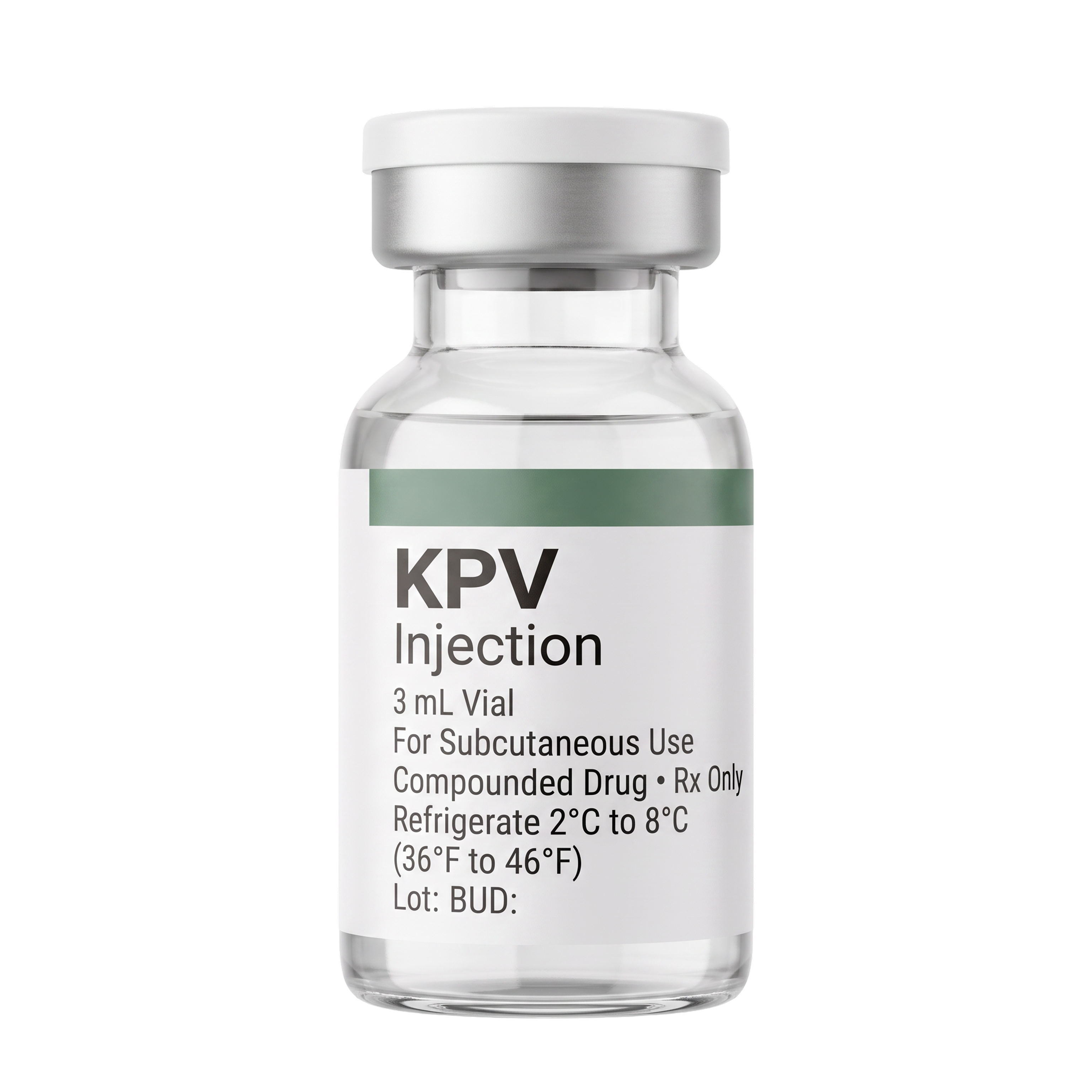
KPV has become one of the most searched peptides in the wellness space, and most of the people searching are asking the same thing: is this an inflammation peptide that actually works? The accurate answer is that it is an interesting research molecule with very little human data. This guide explains what KPV is, what the studies show, and what to consider before deciding whether to ask a provider about it.
What KPV is
KPV is about as small as a peptide gets: three amino acids, lysine (K), proline (P) and valine (V). It is a fragment of alpha-melanocyte-stimulating hormone, usually shortened to alpha-MSH. Alpha-MSH is a natural signaling molecule best known for its role in skin pigmentation, but it also helps regulate inflammation. Researchers became interested in KPV because the small fragment appears to carry some of the hormone’s effect on inflammatory signaling without the pigmentation effects.
What the research shows
The studies on KPV are mostly in cell cultures and animals. In those experiments, KPV reduced inflammatory signaling in skin and gut tissue, including in mouse models of intestinal inflammation. That is a real finding, and it explains why people ask about KPV in connection with skin health, wound healing and gut health.
It is also early research. Tiny peptides are easily broken down in the body, and in animal work, researchers have had to focus on how to get KPV to the right tissue. What happens in those experiments does not tell us how a product used by a person behaves. Large, controlled human trials have not tested KPV, so it has not been shown to help any skin or gut condition in people.
KPV compared with BPC-157
KPV and BPC-157 are often mentioned together, but they are different. KPV comes from a hormone and has been studied for its effect on inflammatory signaling. BPC-157 is based on a protein found in gastric juice and has been studied for tissue repair. Both rely mostly on animal evidence, and neither has been proven in people. Which one, if either, makes sense for you is a question for a provider who knows your history.
Safety questions
Human safety data are limited, so the full side effect profile is not known. Reports from people who have used KPV are anecdotal and include mild irritation where it is applied or injected, headache, nausea and fatigue. Because KPV is related to a hormone that affects immune and inflammatory signaling, tell your provider if you have an immune condition or take medication that affects your immune system. Pregnant or nursing patients should not use it unless a provider directs otherwise.
FDA status and compounding
KPV is not an FDA approved drug. A licensed pharmacy can prepare it as a compounded medication for an individual patient with a prescription. Compounded medications are not FDA approved, which means the FDA has not evaluated their safety, effectiveness or quality. Rules about which substances may be compounded can change, and your provider and pharmacy follow the requirements in effect at the time.
How DrWell approaches it
A DrWell provider reviews your health history and medications, and decides whether KPV is appropriate. If it is prescribed, it is compounded by a prevetted 503A pharmacy, and your provider explains how to use it and follows up with you. Using a vetted pharmacy improves quality control. It does not make KPV FDA approved and does not establish that it works.