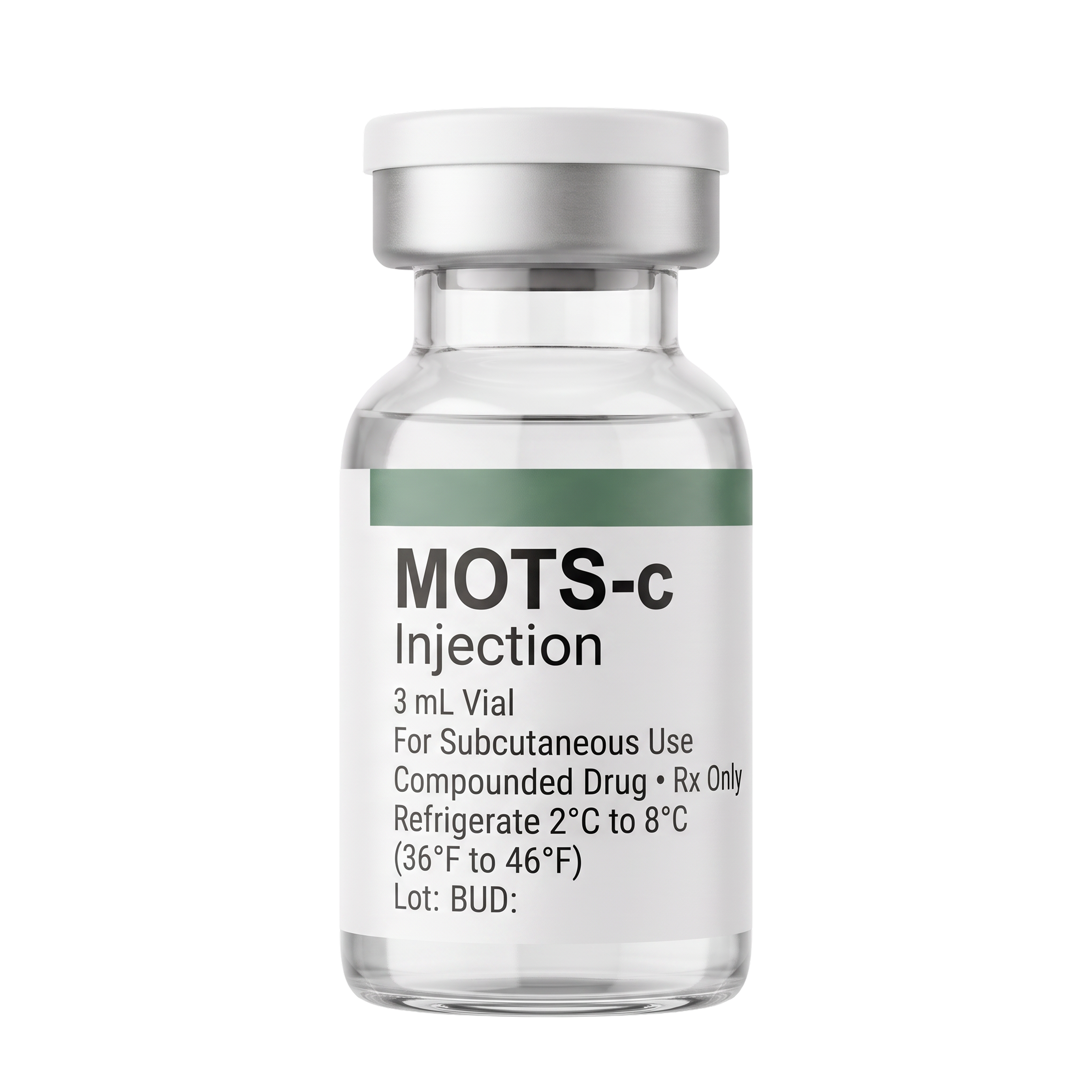
MOTS-c is one of the newer names in the peptide conversation, and it shows up in searches about energy, metabolism and weight. It is also one of the less understood. This guide explains what MOTS-c is, what the science supports, and where the claims get ahead of the evidence.
What MOTS-c is
Most of a cell’s genetic material sits in the nucleus, but mitochondria, the structures that produce a cell’s energy, carry a small amount of their own DNA. In 2015, researchers reported that a short stretch of that mitochondrial DNA encodes a peptide of 16 amino acids, which they named MOTS-c. That finding was notable because it suggested mitochondria do more than make energy. They also produce signals that affect the rest of the body.
What the research shows
In laboratory and animal studies, MOTS-c influenced how cells handle glucose and fat. In mice, researchers reported effects on insulin sensitivity and on resistance to weight gain on a high-fat diet. In people, the work has been more limited and has mostly measured the body’s own MOTS-c levels, for example how they change with exercise and age.
Those are two very different things. Seeing that your body produces more MOTS-c after exercise does not show that taking MOTS-c as a medication will improve your energy or body composition. No large, controlled trial has shown that it does. MOTS-c is not approved for weight loss or weight management, and nobody should expect a specific outcome from it.
Why the claims run ahead of the evidence
Part of the appeal is the story: a peptide made by your own mitochondria that responds to exercise. That is a real area of research. It is also why MOTS-c gets described online as an energy or metabolism booster. The accurate summary is that the biology is promising and the human evidence for using it as a treatment does not exist yet.
Safety questions
Human safety data are limited, so the full side effect profile is not known. Reports from people who have used it are anecdotal and include irritation at the injection site, headache, nausea and fatigue. Because research suggests MOTS-c may influence how the body uses glucose, tell your provider if you have diabetes or take diabetes medication, and watch for symptoms of low blood sugar such as shakiness, sweating or confusion. Pregnant or nursing patients should not use it unless a provider directs otherwise. Long-term safety has not been studied.
FDA status and compounding
MOTS-c is not an FDA approved drug. A licensed pharmacy can prepare it as a compounded medication for an individual patient with a prescription. Compounded medications are not FDA approved, which means the FDA has not evaluated their safety, effectiveness or quality. Rules about which substances may be compounded can change, and your provider and pharmacy follow the requirements in effect at the time.
How DrWell approaches it
A DrWell provider reviews your health history, medications and lab results before deciding whether MOTS-c is appropriate. If it is prescribed, it is compounded by a prevetted 503A pharmacy, and your provider explains how to use it and follows up with you. Using a vetted pharmacy improves quality control. It does not make MOTS-c FDA approved and does not establish that it works.