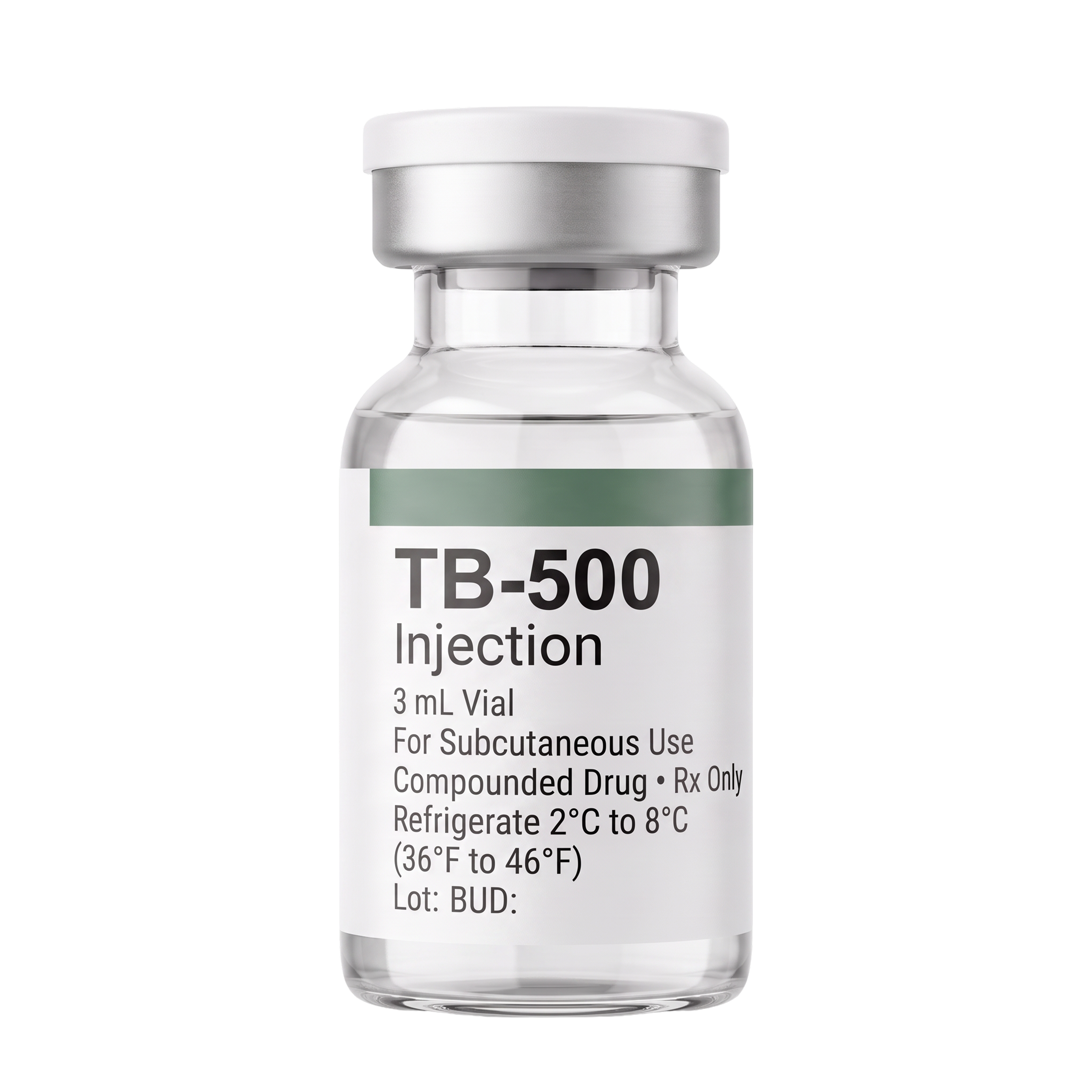
BPC-157 and TB-500 almost always come up together. They are discussed in the same forums, listed in the same product catalogs and asked about in the same searches. They are not the same thing, though, and the research behind each is different. This guide explains what TB-500 is, how it compares with BPC-157, and how much is actually known.
What TB-500 is
TB-500 is a synthetic peptide designed around thymosin beta-4, a protein that the body makes in nearly all cells. Thymosin beta-4 helps cells move to where they are needed and takes part in how tissue repairs itself. TB-500 is usually described as a laboratory-made version based on part of that protein. People ask about it mostly in connection with tissue repair and wound healing.
What the research shows
Research on thymosin beta-4 has looked at cell movement, inflammation and the formation of new blood vessels, mostly in cell cultures and animals. Thymosin beta-4 itself has also been studied in clinical settings. That distinction matters: studies of the natural protein are not evidence about TB-500. There are no large, controlled human trials showing that TB-500 speeds healing, helps an injury recover or treats any condition. What exists is a scientific rationale and animal data, not proof in people.
TB-500 compared with BPC-157
The two peptides start from different places. BPC-157 is based on a protein found in gastric juice and has been studied for tissue repair and gut injury in rodents. TB-500 is based on thymosin beta-4, a protein involved in cell movement and repair. Both are studied for tissue repair, both rely mostly on animal evidence, and neither has been proven in people.
People often ask about using them together. There are no controlled human studies of the combination, so there is no reliable evidence on whether it adds anything or what the combined risks are. If you are considering either one, that is a conversation to have with a provider, not something to figure out from internet protocols.
Safety questions
Human safety data on TB-500 are limited, so the complete side effect profile is not known. People who have used it report injection site irritation, headache, dizziness and fatigue, but these reports are anecdotal. As with other peptides that influence cell movement and blood vessel growth, there is a theoretical concern for people who have cancer or a history of cancer. That is not a proven risk, and it is not a ruled-out one. Your provider needs your complete history, including past cancer and any condition involving abnormal cell growth, to decide whether it is appropriate.
FDA status and compounding
TB-500 is not an FDA approved drug. A licensed pharmacy can prepare it as a compounded medication for an individual patient with a prescription. Compounded medications are not FDA approved, so the FDA has not evaluated their safety, effectiveness or quality. Rules about which substances may be compounded can change, and your provider and pharmacy follow the requirements in effect at the time.
How DrWell approaches it
A DrWell provider reviews your health history, medications and goals before deciding whether TB-500 is appropriate. If it is prescribed, it is compounded by a prevetted 503A pharmacy, and your provider explains how to use it and follows up with you. Using a vetted pharmacy improves quality control. It does not make TB-500 FDA approved and does not establish that it works.
Tested athletes should also know that the World Anti-Doping Agency prohibits thymosin beta-4 and its derivatives.