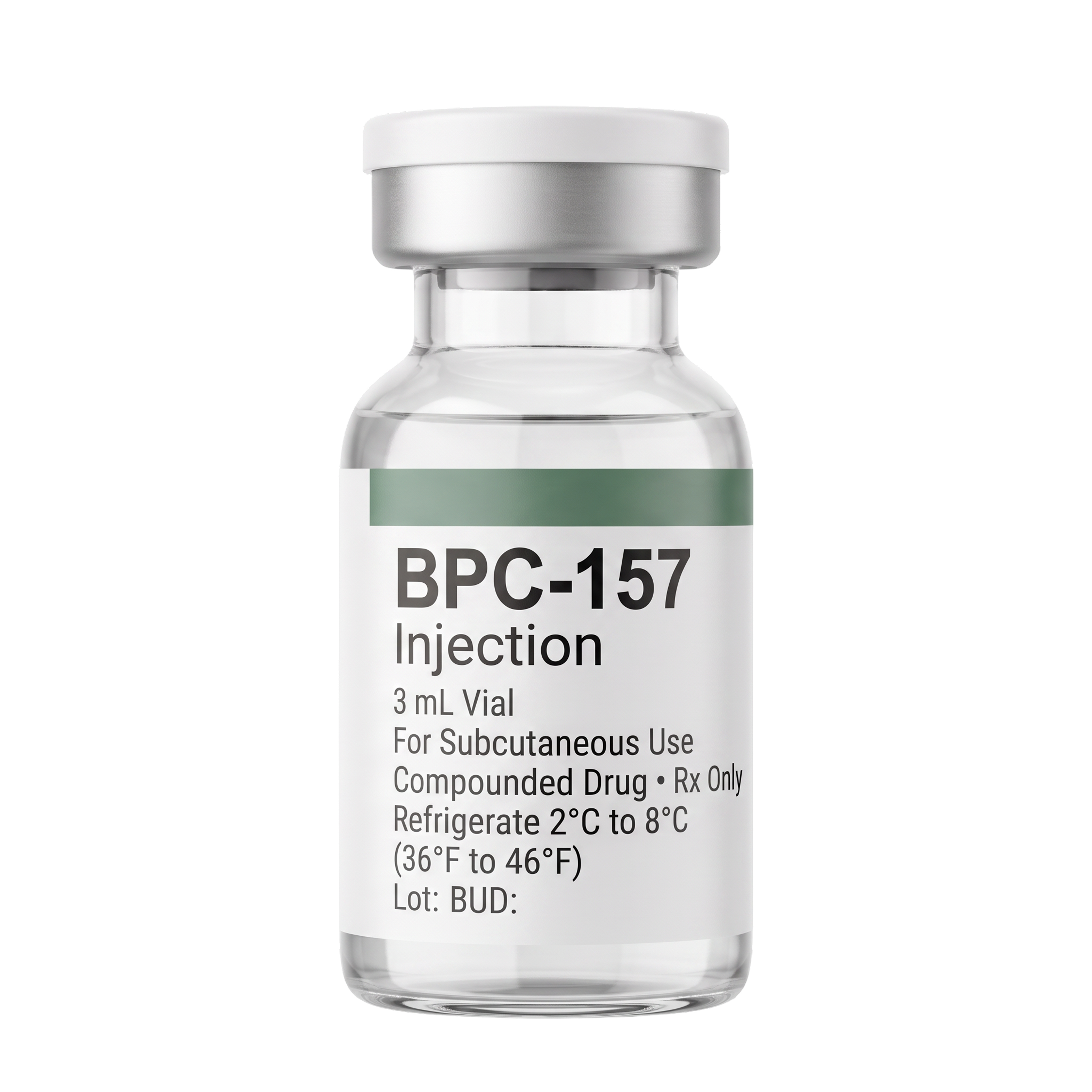
Search for BPC-157 and you will find confident claims about faster tendon recovery, calmer joints and a healthier gut. What you will find far less of is human data. This guide explains what BPC-157 is, where the interest comes from, what has and has not been shown, and what to weigh if you are considering it.
What BPC-157 is
BPC-157 is a synthetic peptide, a short chain of 15 amino acids. The name stands for Body Protection Compound 157. It is based on a sequence from a protein found in human gastric juice, and it was first described in research in the 1990s. The version people ask about today is made in a laboratory, not extracted from the body.
Where the excitement comes from
Most of what is known about BPC-157 comes from laboratory and animal studies, mainly in rodents. In those studies, researchers created injuries to tendons, muscles, ligaments or the digestive tract and then looked at whether BPC-157 changed how the tissue healed. Many of those studies reported positive effects, along with changes in blood vessel growth and inflammatory signaling. That is why you see so many “benefits” claims online.
There are two reasons to read those claims carefully. First, a large share of the published work comes from a small number of related research groups, and independent replication has been limited. Second, results in rodents often do not carry over to people. A deliberately induced injury in a healthy animal is not the same as a long-standing tendon problem in an adult, and the doses and routes used in animal studies do not translate directly to human use.
What we know about people
The human evidence is thin. A few small and early studies exist, but there are no large, well-controlled trials showing that BPC-157 improves joint, tendon, ligament or gut problems. That means nobody can say how well it works, how long any effect would last, or for whom. A provider who tells you otherwise is going beyond the evidence.
Safety questions
Because controlled human safety data are limited, the full side effect profile is not known. People who have used BPC-157 report irritation at the injection site, nausea, dizziness and fatigue, but those accounts are anecdotal and do not come from controlled studies.
There is also a theoretical concern. Research suggests BPC-157 may influence angiogenesis, the growth of new blood vessels. That process is part of normal healing, but it is also something to be careful about in people who have cancer, a history of cancer or precancerous conditions. This has not been shown to cause harm in people, and it has not been ruled out either. It is the main reason a provider needs your full health history before prescribing anything like it. Long-term safety has not been studied.
Where a peptide comes from matters too. Products sold online as “research chemicals” are not made for human use and are not held to pharmacy quality standards, so what is in the vial may not match the label.
FDA status and compounding
BPC-157 is not an FDA approved drug. A licensed pharmacy can prepare it as a compounded medication for an individual patient with a prescription from a licensed provider. Compounded medications are not FDA approved, which means the FDA has not evaluated their safety, effectiveness or quality. Rules about which substances may be compounded can change, so your provider and pharmacy follow the requirements in effect at the time.
How DrWell approaches it
At DrWell, a licensed provider decides whether BPC-157 is appropriate for you after reviewing your health history, current medications, any history of cancer, and whether you are pregnant or nursing. If your provider prescribes it, it is compounded by a prevetted 503A pharmacy and you receive instructions and follow-up from your provider. Using a vetted pharmacy improves quality control. It does not make the medication FDA approved, and it does not prove that it works.
If you compete in tested sports, check first: the World Anti-Doping Agency lists BPC-157 as a prohibited substance.